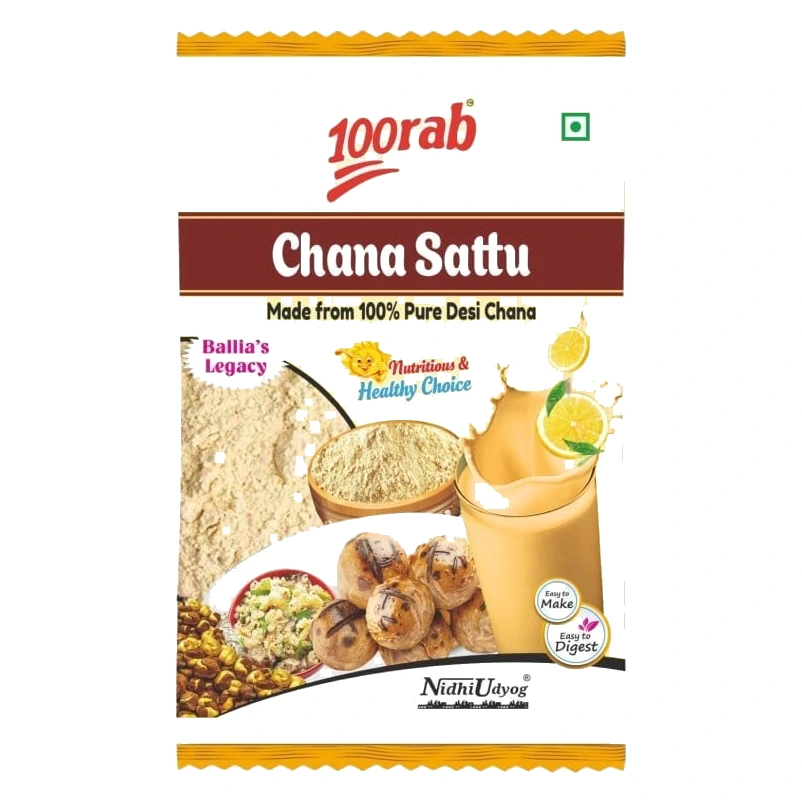
100rab Chana Sattu
Published · Last updated
A realistic serve of 100rab Chana Sattu (30 g, typical serve estimate) has 117 kcal, 6.6 g protein, 18.6 g carbohydrate, 1.6 g fat and 3 mg sodium. Per 100 g it has 389 kcal, 22.2 g protein, 62.1 g carbohydrate, 5.3 g fat and 11 mg sodium.
100rab Chana Sattu is a single-ingredient flour of roasted gram, used for cooling drinks, parathas and laddoos. It scores [L]DA2: nutrition is low because only protein earns credit, ingredients are clean but lose points for a high-fibre claim the panel does not back, and risk is low. A handy staple for everyday drinks and dough, but not a source of fibre.
Ingredients, decoded
1 listed- 100% Roasted Gram Flour
The label gives no sugar figure, so there is nothing to count in teaspoons.
Score and nutrition facts for 100rab Chana Sattu:
| Energy | 389.1 kcal |
|---|---|
| Protein | 22.2 g |
| Carbohydrates | 62.1 g |
| Total fat | 5.3 g |
| Sodium | 11 mg |
Think this score is wrong?
Why 100rab Chana Sattu scores [L]DA2
Nutrition is a D because only protein earns credit and no fibre or minerals are declared. Ingredients are an A for one plain ingredient, less a small loss for the fibre claim. Risk is a 2, driven by 389 kcal per 100 g.
Low nutrient density
- Protein
- 22.2 g
- Fibre
- Not declared
- Vitamins and minerals
- None declared
- Energy
- 389 kcal
01 Nutrition density: why D
Protein is 22.16 g per 100 g, about 23% of the calories, and it is the only thing that earns credit. It comes from one source, roasted gram flour.
No fibre, vitamins or minerals are declared, so nothing else lifts the grade. The listing text mentions fibre and minerals, but the panel gives no figures for them.
Scored on protein, fibre and twelve vitamins and minerals, against the Codex and FSSAI "source" and "high" levels, per 100 g and per 100 kcal. Protein also has to supply at least 12.5% of the calories to count, and 25% for full credit.
Clean, minimally processed
- Base
- 100% Roasted Gram Flour
- Sweeteners
- None added
- Additives
- 0
- Flagged
- None
02 Ingredient integrity: why A
The list is a single ingredient, 100% roasted gram flour, with no additives, no sweetener and no oil. That earns the top ingredient grade.
The back of the pack says sattu's high fibre aids fullness, weight management and blood sugar, yet the panel declares no fibre. That hollow claim costs ingredient points and sets the [L] flag.
Scored on how processed the ingredients are, which additives are used and why, and whether the label keeps its promises.
Low risk
- Sodium
- 11 mg
03 Load risk: why 2
Energy is the main driver: 389 kcal per 100 g sets the risk number at 2. Free sugar is 0 g and sodium is 11 mg per 100 g, so they add almost nothing.
No sugar, saturated fat or trans fat enters the score, so the risk stays low.
Scored on free sugar, sodium, saturated fat and trans fat, each weighed by how strong the evidence of harm is.
[L] The name or pack claims promise more than the ingredient list delivers. See Claims vs reality.
Red flags
No major red flags on the label.
Green flags
- +Green flag: Source of protein (22.2g)
- +Green flag: Low sodium
- +Green flag: No additives
Does 100rab Chana Sattu live up to its claims?
The 100% desi chana and no-additives claims hold. The high-fibre claims do not: the panel declares no fibre, and that is what sets the [L] flag.
- On the packHolds
“Made from 100% Pure Desi Chana”
The ingredient list is one item, 100% roasted gram flour, with nothing added.
- On the packHolds
“No Artificial Preservatives, Colors, or Additives”
No additive of any kind is listed. The product is a single ground ingredient.
- On the packMisleading
“Sattu's high fiber promotes fullness”
The panel declares no fibre, so the high-fibre claim, repeated for energy and weight management, has nothing behind it. This is what sets the [L] flag.
- On the packBe careful
“Rich in Protein and Fiber”
Protein is real at 22.16 g per 100 g, about 6.6 g in a 30 g serve. Fibre is not declared on the panel.
- Retail listingBe careful
“Rich in protein, fiber, and essential minerals”
The retailer page says fibre and essential minerals are rich, but the pack declares no fibre and no minerals.
What's in 100rab Chana Sattu?
One ingredient, roasted gram flour, with no additives. There is nothing to watch in the list; the point to note is that fibre and minerals are not declared.
1 ingredient listed. None of them is an additive or watched ingredient in our research.
The ingredient list, read for you
The label reads 100% roasted gram flour, which is ground roasted chickpea. With a single ingredient there is no order or percentage to read, and nothing is added for taste, colour or shelf life.
The label numbers, read for you
Per 100 g the panel gives 389 kcal, 22.16 g protein, 62.12 g carbohydrate, 5.29 g fat and 11 mg sodium. Protein and energy are the two numbers that decide the score; sugar is not added and sodium is very low.
No serve is printed. A typical 30 g serve, which is about two heaped tablespoons, gives roughly 117 kcal, 6.6 g protein and 3 mg sodium. Fibre, vitamins and minerals are not declared.
What it doesn’t have
- No fibre figure is declared, despite the fibre claims on the back of the pack.
- No vitamins or minerals are declared on the panel.
What to know about 100rab Chana Sattu
100% roasted gram flour, but no fibre declared
100rab Chana Sattu is a 500 g pack of ground roasted gram (desi chana), and nothing else: the label reads 100% roasted gram flour. It is the traditional Ballia-style sattu, bought to mix into a cooling summer drink, knead into paratha dough or roll into laddoos.
What you get is a protein-rich flour: 22.16 g protein, 62.12 g carbohydrate and 5.29 g fat in 100 g, which comes to 389 kcal. Sodium is only 11 mg and no sugar is added. The panel prints no fibre, no vitamins and no minerals, and no serve size.
The name and the 100% claim are accurate. The back of the pack, though, says sattu's high fibre promotes fullness and helps weight management, and the panel declares no fibre at all. That unsupported claim is what sets the [L] flag. CleanPlate scores it [L]DA2.
Who should eat 100rab Chana Sattu?
Everyday for most adults and active people. Children and anyone watching blood sugar can have it a few times a week, since the carbohydrate is 62 g per 100 g.
- Most adultsEveryday
One plain ingredient, 22.16 g protein and 11 mg sodium per 100 g.
- ChildrenA few times a week
No additives or sugar, but 389 kcal per 100 g, so keep serves small.
- Diabetes or prediabetesA few times a week
62 g carbohydrate per 100 g, with no fibre declared to slow it.
- Active peopleEveryday
About 6.6 g protein in a 30 g serve, easy to mix into drinks.
Recipes with 100rab Chana Sattu
The pack suggests a sattu drink, paratha and laddoo. A 30 g typical serve gives about 6.6 g protein, and what you add decides the rest.
Sattu drink
Stir 30 g into water or buttermilk with salt and lemon for about 6.6 g protein and 117 kcal, with no sugar added.
Sattu paratha
Use it as a spiced filling: with 22.16 g protein per 100 g, it adds more protein than a plain wheat paratha.
Sattu laddoo
Roll the flour into sweet balls; the flour has 0 g sugar, so the sweetener you add sets the sugar.
100rab Chana Sattu: common questions
Is 100rab Chana Sattu healthy?
100rab Chana Sattu is not high in sugar, salt or saturated fat, so it can be a regular part of your diet.
How many calories and how much protein are in 100rab Chana Sattu?
Per 100 g, 100rab Chana Sattu has 389 kcal, 22.2 g protein, 62.1 g carbohydrate, 5.3 g fat and 11 mg sodium. One serve (30 g, typical serve estimate) has 117 kcal and 6.6 g protein.
What are the ingredients in 100rab Chana Sattu?
1 ingredient, in label order: 100% Roasted Gram Flour.
Does 100rab Chana Sattu live up to its claims?
5 claims checked: 2 hold, 2 need care, 1 is misleading. "Sattu's high fiber promotes fullness" is misleading: The panel declares no fibre, so the high-fibre claim, repeated for energy and weight management, has nothing behind it. This is what sets the [L] flag. "Rich in Protein and Fiber" needs care: Protein is real at 22.16 g per 100 g, about 6.6 g in a 30 g serve. Fibre is not declared on the panel.
Who should limit 100rab Chana Sattu?
Most adults: everyday. One plain ingredient, 22.16 g protein and 11 mg sodium per 100 g. Children: a few times a week. No additives or sugar, but 389 kcal per 100 g, so keep serves small. Diabetes or prediabetes: a few times a week. 62 g carbohydrate per 100 g, with no fibre declared to slow it.
How much sugar, salt and saturated fat does 100rab Chana Sattu have?
Per 100 g, 100rab Chana Sattu has 11 mg sodium (about 0 g salt). The FSSAI and UK FSA "high" lines are 10 g added sugar, 600 mg sodium and 5 g saturated fat per 100 g. It is under all three lines.
What does the DA2 score mean for 100rab Chana Sattu?
The first letter (D) grades nutrition density on A to E, the second (A) grades ingredient integrity on A to E, and the number (2) grades load risk on 1 to 5. A and 1 are best. Nutrition: Protein is 22.16 g per 100 g, about 23% of the calories, and it is the only thing that earns credit. It comes from one source, roasted gram flour. Ingredients: The list is a single ingredient, 100% roasted gram flour, with no additives, no sweetener and no oil. That earns the top ingredient grade. Load risk: Energy is the main driver: 389 kcal per 100 g sets the risk number at 2. Free sugar is 0 g and sodium is 11 mg per 100 g, so they add almost nothing.
Last reviewed October 31, 2026. Scored with the CleanPlate method from the published label. Spotted a mistake? .
Reference values: FSSAI labelling regulations, Codex Alimentarius, ICMR-NIN and the UK front of pack guidance. Where our label data comes from.
Label read on 31 October 2026, from photos of the pack. If the pack has changed since, tell us.
Score history (1)
| Date | Score | Method | Why |
|---|---|---|---|
| 31 October 2026 | DA2 | v5.0 | First scored |
Every change to this score is logged. See corrections and the method changelog.
Better Atta & Flours
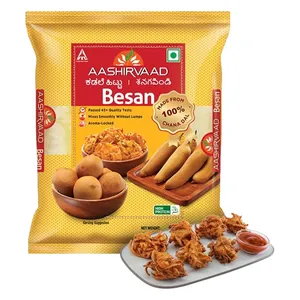
All Atta & Flours →- Aashirvaad 100% Chana Dal Besan (Kadale Hittu/Senagapindi)
- +Green flag: Source of protein (22.5g)
- +Green flag: High fibre (9.3g)
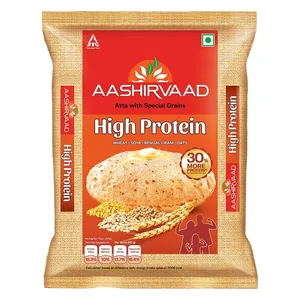
- Aashirvaad High Protein Atta
- +Green flag: Source of protein (14.7g)
- +Green flag: High fibre (13.6g)
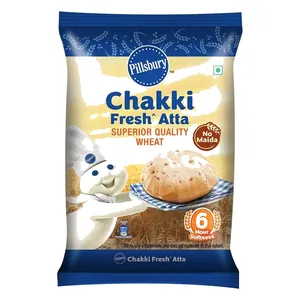
- Pillsbury Fresh Superior-Quality Chakki Atta
- +Green flag: High fibre (10g)
- +Green flag: No added sugar
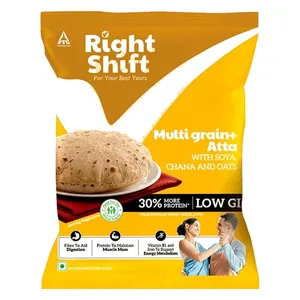
- Right Shift Multigrain Atta (High Protein, Low GI)
- +Green flag: Source of protein (14.7g)
- +Green flag: High fibre (13.6g)