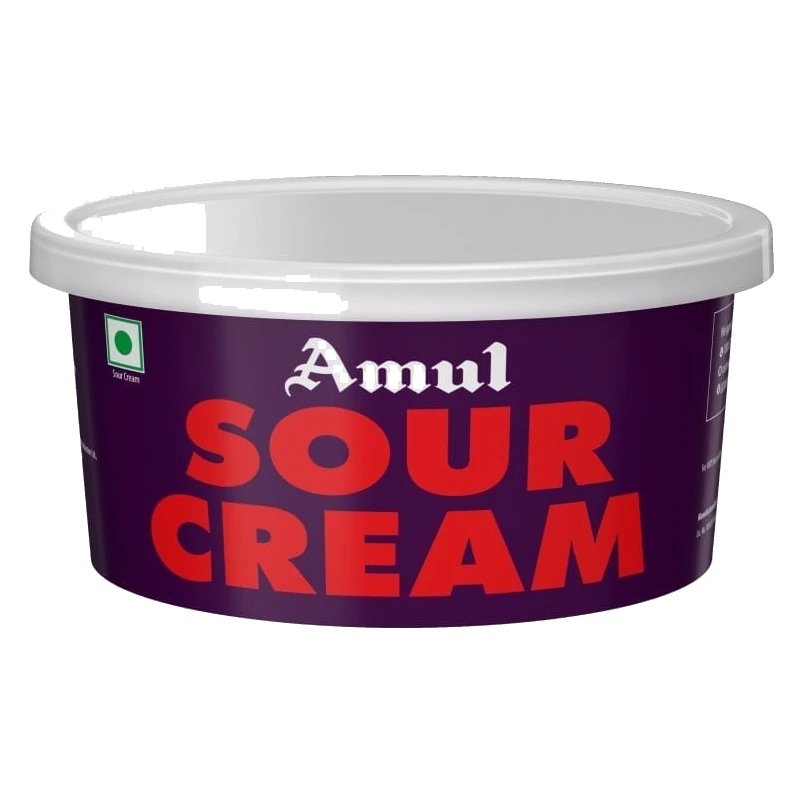
Amul Sour Cream
Published
Amul Sour Cream is a tangy, spoonable dairy topping made from milk solids and a live culture. It scores [L]EA3: nutrition is low because it is rich in fat and has little protein, ingredients are a short plain list that loses points because no cream is listed despite the name, and risk is middling on saturated fat. Best used by the spoonful, now and then.
Ingredients, decoded
2 listed- Milk solids
- active lactic culture
½ teaspoon of sugar in every 100 g · 2.5 g total sugar, 5 g a teaspoon
| Energy | 290 kcal |
|---|---|
| Protein | 2 g |
| Carbohydrates | 2.5 g |
| Total sugars | 2.5 g |
| Added sugars | 0 g |
| Total fat | 30 g |
| Saturated fat | 18 g |
| Trans fat | 0 g |
| Cholesterol | 90 mg |
| Sodium | 25 mg |
Think this score is wrong?
What to know about Amul Sour Cream
Rich and simple, but no cream is listed
Amul Sour Cream is a 200 g tub of cultured dairy topping with a two-item ingredient list: milk solids and active lactic culture. No percentages are declared. It is bought to dollop on hot dishes, spread in wraps or stir into dips for a tangy, creamy finish.
Per 100 g it has 290 kcal, 30 g fat, 18 g saturated fat, 2 g protein and 2.5 g sugar, none of it added. The pack prints a 25 g serve, which works out to about 72.5 kcal and 4.5 g saturated fat. Sodium is low at 25 mg per 100 g, and trans fat is declared as 0 g.
The name promises cream, and the ingredient list does not show any. The base is milk solids, and that missing ingredient is what sets the [L] flag. The list itself is short and free of additives. CleanPlate scores it [L]EA3.
Does Amul Sour Cream live up to its claims?
The sugar and culture statements hold, but the name does not: no cream is listed, only milk solids and active lactic culture. That sets the [L] flag.
- Product nameMisleading
“Amul Sour Cream”
The list shows only milk solids and active lactic culture. Cream, which the name promises, is not listed.
- On the packHolds
“Added Sugars 0.0 g”
Added sugar is 0 g per 100 g. The 2.5 g of sugar in the panel is the total, not added.
- On the packHolds
“Active lactic culture”
It is the second item on the ingredient list, which is only two items long. No amount is declared.
Why Amul Sour Cream scores [L]EA3
Nutrition is an E on 2 g protein and no fibre per 100 g. Ingredients are an A for a two-item list, held back by the missing cream. Risk is a 3 on 18 g saturated fat per 100 g.
Very low nutrient density
- Protein
- 2 g
- Fibre
- Not declared
- Vitamins and minerals
- None declared
- Energy
- 290 kcal
01 Nutrition density: why E
Protein is 2 g per 100 g, under 3% of the calories, and there is no fibre. Almost all the energy comes from fat: 30 g per 100 g, which gives 290 kcal.
No vitamins or minerals are declared, so nothing lifts the grade. In a 25 g serve you get about 0.5 g protein and 72.5 kcal.
Scored on protein, fibre and twelve vitamins and minerals, against the Codex and FSSAI "source" and "high" levels, per 100 g and per 100 kcal. Protein also has to supply at least 12.5% of the calories to count, and 25% for full credit.
Clean, minimally processed
- Base
- Milk solids
- Sweeteners
- None added
- Additives
- 0
- Flagged
- None
02 Ingredient integrity: why A
The list is two items, milk solids and active lactic culture, with no additives, no sweetener and no hydrogenated fat. That earns a high base for the ingredient grade.
The name says cream, and no cream appears in the list. A product named for an ingredient it does not list costs ingredient points, and that sets the [L] flag. No ingredient percentages are declared, which is a small gap.
Scored on how processed the ingredients are, which additives are used and why, and whether the label keeps its promises.
Moderate risk
- Added sugar
- 0 g
- Sodium
- 25 mg
- Saturated fat
- 18 g
- Trans fat
- 0 g
03 Load risk: why 3
Saturated fat drives the risk: 18 g per 100 g, more than three times the 5 g high line. A 25 g serve has about 4.5 g.
Energy is 290 kcal per 100 g. Added sugar is 0 g, sodium is 25 mg and trans fat is 0 g, so none of those add to the risk.
Scored on free sugar, sodium, saturated fat and trans fat, each weighed by how strong the evidence of harm is.
[L] The name or pack claims promise more than the ingredient list delivers. See Claims vs reality.
Red flags
- −Red flag: High saturated fat (18g)
Green flags
- +Green flag: No added sugar
- +Green flag: Low sodium
- +Green flag: No additives
What's in Amul Sour Cream?
Milk solids and active lactic culture are the whole list, with no additives. The watch points are the saturated fat and the cream the name promises but the list lacks.
The ingredient list, read for you
Milk solids lead the list and make up the body of the product. Active lactic culture is the second item and gives the sour taste. No percentages are declared, and there is no cream, stabiliser, sweetener or preservative on the list.
Ingredients to watch
- Saturated fatConcern
18 g per 100 g, about 4.5 g in a 25 g serve. This is the main driver of the risk grade.
- Cream not listedConcern
The name says cream, but only milk solids and active lactic culture are listed. This costs ingredient points and sets the [L] flag.
- Energy and cholesterolWorth watching
290 kcal and 90 mg cholesterol per 100 g, from a base that is 30 g fat. A 25 g serve has about 72.5 kcal.
- Short, additive-free listFine
Two ingredients, no added sugar, no hydrogenated fat and trans fat declared as 0 g.
- SodiumFine
25 mg per 100 g, about 6 mg in a 25 g serve.
What it doesn’t have
- No cream appears on the list, despite the name.
- No ingredient percentages and no vitamins or minerals are declared.
Who should eat Amul Sour Cream?
An occasional topping for most adults and children, rarely for anyone watching heart health, since a 25 g serve has about 4.5 g saturated fat.
- Most adultsOccasionally
A 25 g serve has about 4.5 g saturated fat, and 18 g per 100 g is high.
- ChildrenOccasionally
Plain and additive-free, but 18 g saturated fat per 100 g, so keep to a spoonful.
- Heart healthRarely
18 g saturated fat and 90 mg cholesterol per 100 g.
- Lactose intoleranceCheck with your doctor
Made from milk solids and contains milk; lactose is not declared on the panel.
Recipes with Amul Sour Cream
A 25 g spoonful tops hot dishes, dips and wraps for about 72.5 kcal, so it works best as a finishing touch.
Baked potato topping
Add one 25 g spoonful for tang, which brings about 72.5 kcal and 4.5 g saturated fat.
Quick dip
Stir a spoonful or two into a herb or onion dip, and keep the serve near 25 g to hold the saturated fat down.
Taco or rajma finish
A dollop on hot rajma or tacos adds richness but only about 0.5 g protein, so the protein must come from the dish.
Amul Sour Cream: common questions
What is the CleanPlate score of Amul Sour Cream?
Amul Sour Cream is a tangy, spoonable dairy topping made from milk solids and a live culture. It scores [L]EA3: nutrition is low because it is rich in fat and has little protein, ingredients are a short plain list that loses points because no cream is listed despite the name, and risk is middling on saturated fat. Best used by the spoonful, now and then. Nutrition E, ingredients A, load risk 3; nutrition and ingredients run A to E, risk runs 1 to 5, and A and 1 are best.
How many calories and how much protein are in Amul Sour Cream?
Per 100 g, Amul Sour Cream has 290 kcal, 2 g protein, 2.5 g carbohydrate, 30 g fat and 18 g saturated fat. One serve (1 serve, 25 g) has 73 kcal and 0.5 g protein.
What are the ingredients in Amul Sour Cream?
2 ingredients, in label order: Milk solids, active lactic culture.
Does Amul Sour Cream live up to its claims?
3 claims checked: 2 hold, 1 is misleading. "Amul Sour Cream" is misleading: The list shows only milk solids and active lactic culture. Cream, which the name promises, is not listed.
Who should limit Amul Sour Cream?
Most adults: occasionally. A 25 g serve has about 4.5 g saturated fat, and 18 g per 100 g is high. Children: occasionally. Plain and additive-free, but 18 g saturated fat per 100 g, so keep to a spoonful. Heart health: rarely. 18 g saturated fat and 90 mg cholesterol per 100 g.
How much sugar, salt and saturated fat does Amul Sour Cream have?
Per 100 g, Amul Sour Cream has 0 g added sugar, 25 mg sodium (about 0.1 g salt) and 18 g saturated fat. The FSSAI and UK FSA "high" lines are 10 g added sugar, 600 mg sodium and 5 g saturated fat per 100 g. It is high in saturated fat.
Last reviewed October 29, 2026. Scored with the CleanPlate method from the published label. Spotted a mistake? .
Label read on 29 October 2026, from photos of the pack. If the pack has changed since, tell us.
Score history (1)
| Date | Score | Method | Why |
|---|---|---|---|
| 29 October 2026 | EA3 | v5.0 | First scored |
Every change to this score is logged. See corrections and the method changelog.
Better Curd & Yogurt
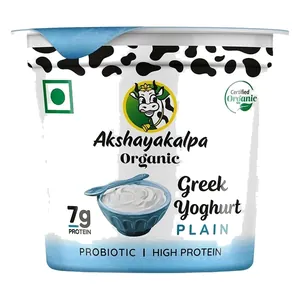
All Curd & Yogurt →- Akshayakalpa Organic Plain Greek Yogurt
- +Green flag: Source of protein (7.8g)
- +Green flag: No added sugar
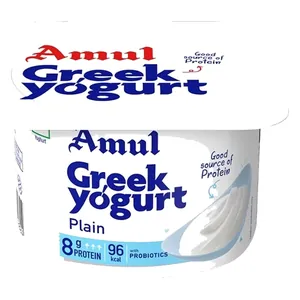
- Amul Greek Yogurt (Plain)
- +Green flag: Source of protein (8g)
- +Green flag: No added sugar
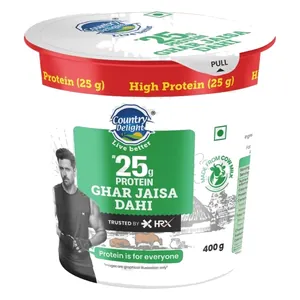
- Country Delight 25 g High Protein Curd (Ghar Jaisa Dahi)
- +Green flag: Source of protein (6.3g)
- +Green flag: No added sugar
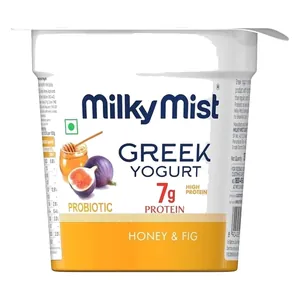
- Milky Mist Honey & Fig Greek Yogurt
- +Green flag: Source of protein (7g)
- +Green flag: High fibre (10.5g)