Dry Fruit Laddu
Published · Last updated
A realistic serve of Dry Fruit Laddu (1 ladoo, 33 g serve) has 147 kcal, 2 g protein, 23.1 g carbohydrate, 5.9 g fat, 0 g added sugar and 2 mg sodium. Per 100 g it has 446 kcal, 6 g protein, 70 g carbohydrate, 18 g fat, 6 g saturated fat, 0 g added sugar, 7 g fibre and 5 mg sodium.
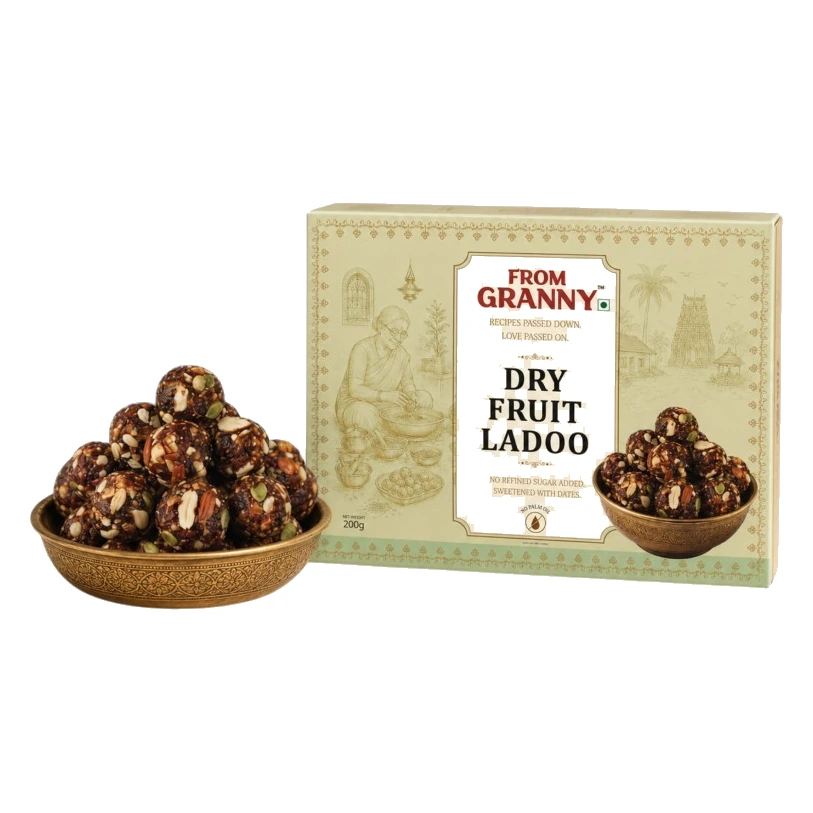
From Granny Dry Fruit Laddu is a sweet made entirely of dates, nuts, seeds and cow ghee. It scores CA3: middling on nutrition because it is calorie-dense with modest protein, strong on ingredients for a short whole-food list, and moderate on risk from energy and saturated fat. Best as an occasional sweet, one ladoo at a time.
Ingredients, decoded
8 listed- Dates
- Nuts Mix
- Almond
- Cashew Nut
- Walnut
- Seeds Mix
- Watermelon Seeds
- Pumpkin Seeds
- Pistachio
- Cow Ghee
10 teaspoons of sugar in every 100 g · 50 g total sugar, 5 g a teaspoon
Score and nutrition facts for Dry Fruit Laddu:
| Energy | 446 kcal |
|---|---|
| Protein | 6 g |
| Carbohydrates | 70 g |
| Total sugars | 50 g |
| Added sugars | 0 g |
| Dietary fibre | 7 g |
| Total fat | 18 g |
| Saturated fat | 6 g |
| Trans fat | 0 g |
| Cholesterol | 17.3 mg |
| Sodium | 5 mg |
| Magnesium | 90 mg |
Think this score is wrong?
Why Dry Fruit Laddu scores CA3
Nutrition is a C because protein is modest for 446 kcal per 100 g, though fibre is 7 g. Ingredients are an A on a four-item whole-food list, and risk is a 3 on energy and 6 g saturated fat.
Adequate nutrient density
- Protein
- 6 g
- Fibre
- 7 g
- Vitamins and minerals
- Magnesium
- Energy
- 446 kcal
01 Nutrition density: why C
Protein is 6 g per 100 g, mostly from the almond and other nuts, which is low against the 446 kcal the laddu carries, so it earns only partial credit. Fibre is 7 g per 100 g, about 2 g in one ladoo.
Magnesium is declared at 90 mg per 100 g, 30 mg per ladoo, which adds a small amount to the grade. The energy density and the modest protein are what hold it at a C.
Scored on protein, fibre and twelve vitamins and minerals, against the Codex and FSSAI "source" and "high" levels, per 100 g and per 100 kcal. Protein also has to supply at least 12.5% of the calories to count, and 25% for full credit.
Clean, minimally processed
- Base
- Dates
- Main fat
- Cow Ghee
- Sweeteners
- None added
- Additives
- 0
- Flagged
- None
02 Ingredient integrity: why A
The list is dates, a nuts mix, a seeds mix and cow ghee, with percentages declared for the first three. There are no additives, no added flavour or colour, no hydrogenated fat and no refined sugar, so nothing costs ingredient points.
The claims on the pack match the list, so there is no label-integrity cost. The only gap is that the ghee has no percentage declared.
Scored on how processed the ingredients are, which additives are used and why, and whether the label keeps its promises.
Moderate risk
- Added sugar
- 0 g
- Sodium
- 5 mg
- Saturated fat
- 6 g
- Trans fat
- 0 g
03 Load risk: why 3
Saturated fat is 6 g per 100 g, just over the 5 g high line, and comes from the ghee and nuts. One ladoo has 2 g. Energy at 446 kcal per 100 g, 147 per ladoo, is the other driver.
Added sugar is declared as 0 g, so sugar adds nothing to the risk number, even though the dates give 50 g of total sugars per 100 g. Sodium is 5 mg per 100 g and trans fat is 0 g, so neither plays a part.
Scored on free sugar, sodium, saturated fat and trans fat, each weighed by how strong the evidence of harm is.
Red flags
- −Red flag: High sugar (50g per 100g)
- −Red flag: High saturated fat (6g)
Green flags
- +Green flag: High fibre (7g)
- +Green flag: No added sugar
- +Green flag: Low sodium
Does Dry Fruit Laddu live up to its claims?
The date, no-palm-oil and no-preservative claims hold, and fibre is real at 7 g per 100 g. No refined sugar is true, but the dates still bring 50 g of sugars per 100 g.
- On the packHolds
“Sweetened with dates”
Dates are the first ingredient at 75%, and no other sweetener is listed.
- On the packBe careful
“No refined sugar added”
True: added sugar is 0 g. But the dates bring 50 g of total sugars per 100 g, about 17 g in one 33 g ladoo, which the pack calls naturally occurring sugar.
- On the packHolds
“Rich in fibre”
Fibre is 7 g per 100 g, 2 g per ladoo, which the pack states as 8% of the daily requirement.
- On the packHolds
“No palm oil, No preservatives”
The only added fat is cow ghee, and no preservative or other additive is listed.
- Retail listingBe careful
“Shelf life 60 days”
The retailer page shows a shelf life of 60 days, the pack shows best before 90 days from manufacture.
What's in Dry Fruit Laddu?
Dates lead at 75%, then nuts, seeds and cow ghee. The list is short and whole-food; the things to watch are the sugars from dates and the saturated fat in ghee.
8 ingredients listed. None of them is an additive or watched ingredient in our research.
The ingredient list, read for you
Dates lead at 75%, so the laddu is mostly fruit paste. The nuts mix (almond, cashew, walnut) is 15% and the seeds mix (watermelon seed, pumpkin seed, pistachio) is 5%, adding protein, fibre and fat. Cow ghee binds and roasts the mix, and has no percentage declared. There are no additives.
Ingredients to watch
- Sugars from datesWorth watching
50 g of total sugars per 100 g, about 17 g per ladoo. Added sugar is 0 g, but the sugar is still there.
- Saturated fatWorth watching
6 g per 100 g from cow ghee and nuts, 2 g per ladoo, just over the 5 g high line.
- Energy densityWorth watching
446 kcal per 100 g, 147 kcal per 33 g ladoo. Small in size, but it adds up quickly.
- Short whole-food listFine
Dates, nuts, seeds and ghee only, with no additives, no palm oil and no refined sugar.
- Fibre and magnesiumFine
7 g fibre and 90 mg magnesium per 100 g, so 2 g and 30 mg in one ladoo.
What it doesn’t have
- No percentage is declared for the cow ghee.
- Only magnesium is declared among vitamins and minerals.
What to know about Dry Fruit Laddu
Date-sweetened laddu with 446 kcal per 100 g
From Granny Dry Fruit Laddu is a hand-rolled sweet from a 200 g pack, built on dates (75%), a nuts mix of almond, cashew and walnut (15%), a seeds mix of watermelon seed, pumpkin seed and pistachio (5%) and cow ghee. It is bought as a mithai alternative for after-meal cravings, fasting days and gifting, by people who want a sweet without refined sugar.
Per 100 g it has 446 kcal, 6 g protein, 7 g fibre, 18 g fat and 6 g saturated fat, with 0 g added sugar and 5 mg sodium. One 33 g ladoo, six to a pack, gives 147 kcal, 2 g protein, 2 g fibre and 30 mg magnesium. The cost is the sugar the dates carry: 50 g of total sugars per 100 g, about 17 g per ladoo.
The pack promises dates, no refined sugar, no palm oil and no preservatives, and the ingredient list backs each of them. What it does not say loudly is that fruit sugar is still sugar, and a ladoo is a dense small sweet. CleanPlate scores it CA3.
Who should eat Dry Fruit Laddu?
A few times a week for most adults at one ladoo a time. Occasionally for children and weight management, and a check with your doctor for diabetes, since one ladoo has about 17 g of sugars.
- Most adultsA few times a week
One ladoo is 147 kcal and 2 g saturated fat; eating several adds up fast.
- ChildrenOccasionally
About 17 g of sugars per ladoo, though no additives or dyes.
- Diabetes or prediabetesCheck with your doctor
50 g of total sugars per 100 g from dates, even with 0 g added sugar.
- Weight managementOccasionally
446 kcal per 100 g, so portion is the whole story.
Dry Fruit Laddu: common questions
Is Dry Fruit Laddu healthy?
Dry Fruit Laddu is high in sugar, saturated fat and calories, so a few servings a week is fine.
How many calories and how much protein are in Dry Fruit Laddu?
Per 100 g, Dry Fruit Laddu has 446 kcal, 6 g protein, 70 g carbohydrate, 18 g fat and 6 g saturated fat. One serve (1 ladoo, 33 g serve) has 147 kcal and 2 g protein.
What are the ingredients in Dry Fruit Laddu?
8 ingredients, in label order: Dates, Nuts Mix (Almond, Cashew Nut, Walnut), Seeds Mix (Watermelon Seeds, Pumpkin Seeds, Pistachio), Cow Ghee.
Does Dry Fruit Laddu live up to its claims?
5 claims checked: 3 hold, 2 need care. "No refined sugar added" needs care: True: added sugar is 0 g. But the dates bring 50 g of total sugars per 100 g, about 17 g in one 33 g ladoo, which the pack calls naturally occurring sugar. "Shelf life 60 days" needs care: The retailer page shows a shelf life of 60 days, the pack shows best before 90 days from manufacture.
Who should limit Dry Fruit Laddu?
Most adults: a few times a week. One ladoo is 147 kcal and 2 g saturated fat; eating several adds up fast. Children: occasionally. About 17 g of sugars per ladoo, though no additives or dyes. Diabetes or prediabetes: check with your doctor. 50 g of total sugars per 100 g from dates, even with 0 g added sugar.
How much sugar, salt and saturated fat does Dry Fruit Laddu have?
Per 100 g, Dry Fruit Laddu has 0 g added sugar, 5 mg sodium (about 0 g salt) and 6 g saturated fat. The FSSAI and UK FSA "high" lines are 10 g added sugar, 600 mg sodium and 5 g saturated fat per 100 g. It is high in sugar and saturated fat.
What does the CA3 score mean for Dry Fruit Laddu?
The first letter (C) grades nutrition density on A to E, the second (A) grades ingredient integrity on A to E, and the number (3) grades load risk on 1 to 5. A and 1 are best. Nutrition: Protein is 6 g per 100 g, mostly from the almond and other nuts, which is low against the 446 kcal the laddu carries, so it earns only partial credit. Fibre is 7 g per 100 g, about 2 g in one ladoo. Ingredients: The list is dates, a nuts mix, a seeds mix and cow ghee, with percentages declared for the first three. There are no additives, no added flavour or colour, no hydrogenated fat and no refined sugar, so nothing costs ingredient points. Load risk: Saturated fat is 6 g per 100 g, just over the 5 g high line, and comes from the ghee and nuts. One ladoo has 2 g. Energy at 446 kcal per 100 g, 147 per ladoo, is the other driver.
Last reviewed October 31, 2026. Scored with the CleanPlate method from the published label. Spotted a mistake? .
Reference values: FSSAI labelling regulations, Codex Alimentarius, ICMR-NIN and the UK front of pack guidance. Where our label data comes from.
Label read on 31 October 2026, from photos of the pack. If the pack has changed since, tell us.
Score history (1)
| Date | Score | Method | Why |
|---|---|---|---|
| 31 October 2026 | CA3 | v5.0 | First scored |
Every change to this score is logged. See corrections and the method changelog.
More Indian Sweets
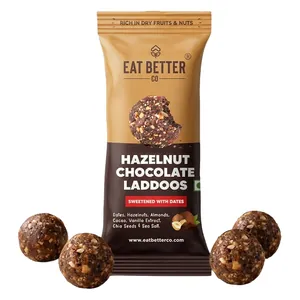
All Indian Sweets →- Hazelnut Chocolate Laddoos
- −Red flag: High sugar (32.2g per 100g)
- +Green flag: High fibre (9.3g)
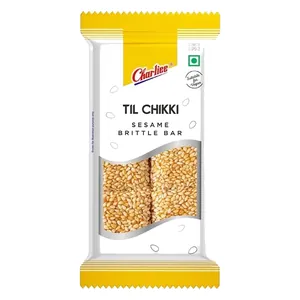
- Til Chikki by Charliee
- −Red flag: High added sugar (33.3g per 100g)
- +Green flag: Source of protein (17.3g)
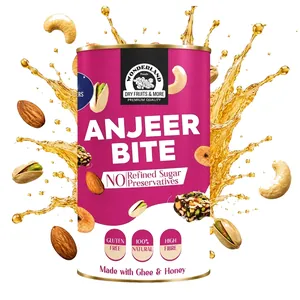
- Wonderland Foods Vrat Anjeer Bites
- −Red flag: High added sugar (15.8g per 100g)
- −Red flag: High saturated fat (18.1g)
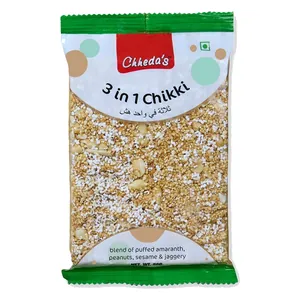
- 3 in 1 Chikki
- −Red flag: High sugar (28.6g per 100g)
- +Green flag: High fibre (7.1g)