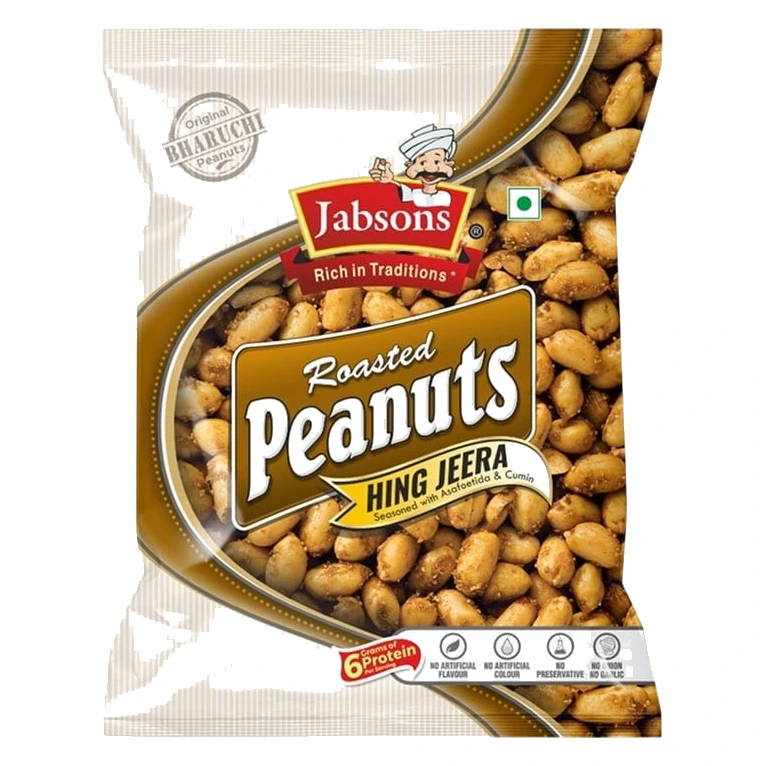
Jabsons Roasted Peanuts Hing Jeera
Published · Last updated
A realistic serve of Jabsons Roasted Peanuts Hing Jeera (2/5 cup, 30 g) has 189 kcal, 6 g protein, 6.3 g carbohydrate, 15.6 g fat, 0.9 g added sugar and 189 mg sodium. Per 100 g it has 630 kcal, 20 g protein, 21 g carbohydrate, 52 g fat, 9 g saturated fat, 3 g added sugar and 630 mg sodium.
Jabsons Roasted Peanuts Hing Jeera is a roasted peanut snack seasoned with cumin and asafoetida, made mostly of peanuts. It scores EB4: low on nutrition because the protein comes with a lot of fat and energy, sound on ingredients thanks to a short, plain list, and high on risk because of the energy, saturated fat and salt. Best as a small handful now and then.
Ingredients, decoded
7 listed- Peanuts
- Refined Cottonseed Oil
- Cumin (Jeera 4%)
- Iodized Salt
- Chilli
- Maltodextrin
- Asafoetida (Hing 0.5%)
1 teaspoon of sugar in every 100 g · 4 g total sugar, 5 g a teaspoon
Score and nutrition facts for Jabsons Roasted Peanuts Hing Jeera:
| Energy | 630 kcal |
|---|---|
| Protein | 20 g |
| Carbohydrates | 21 g |
| Total sugars | 4 g |
| Added sugars | 3 g |
| Total fat | 52 g |
| Saturated fat | 9 g |
| Trans fat | 0 g |
| Cholesterol | 0 mg |
| Sodium | 630 mg |
| Niacin | 11 mg |
Think this score is wrong?
Why Jabsons Roasted Peanuts Hing Jeera scores EB4
Nutrition is an E because 52 g fat and 630 kcal per 100 g outweigh the 20 g protein. Ingredients are a B on a short list led by peanuts, and risk is a 4 on energy, saturated fat and sodium.
Very low nutrient density
- Protein
- 20 g
- Fibre
- Not declared
- Vitamins and minerals
- Niacin
- Energy
- 630 kcal
01 Nutrition density: why E
Protein is 20 g per 100 g, or 6 g in a 30 g serve, mostly from the peanuts themselves. That is real, but the grade stays at the bottom because the same peanuts bring 52 g fat and 630 kcal per 100 g.
Niacin at 11 mg per 100 g adds a little. No fibre is declared on the panel, so little else lifts the grade.
Scored on protein, fibre and twelve vitamins and minerals, against the Codex and FSSAI "source" and "high" levels, per 100 g and per 100 kcal. Protein also has to supply at least 12.5% of the calories to count, and 25% for full credit.
Good, few concerning additives
- Base
- Peanuts
- Main fat
- Refined Cottonseed Oil
- Sweeteners
- Maltodextrin
- Additives
- 0
- Flagged
- Maltodextrin
02 Ingredient integrity: why B
Peanuts at 85% lead a short list, and the peanuts, cumin and asafoetida all carry a declared percentage. There are no colours, no preservatives and no flavourings listed, and nothing on the pack contradicts the list, so there is no label penalty.
The processed parts are the refined cottonseed oil and the maltodextrin, a low-tier additive that does not cost ingredient points here. Chilli and salt have no percentage, which is the only small gap.
Scored on how processed the ingredients are, which additives are used and why, and whether the label keeps its promises.
High risk
- Added sugar
- 3 g
- Sodium
- 630 mg
- Saturated fat
- 9 g
- Trans fat
- 0 g
03 Load risk: why 4
Energy is the biggest driver: 630 kcal per 100 g, 190 kcal per serve. Saturated fat comes next at 9 g per 100 g, above the 5 g high line, then sodium at 630 mg per 100 g.
Added sugar is 3 g per 100 g, about 1 g per serve, so it plays only a small part. Trans fat is declared as 0 g.
Scored on free sugar, sodium, saturated fat and trans fat, each weighed by how strong the evidence of harm is.
Red flags
- −Red flag: High sodium (630mg per 100g)
- −Red flag: High saturated fat (9g)
- −Red flag: Contains Maltodextrin
Green flags
- +Green flag: Source of protein (20g)
Does Jabsons Roasted Peanuts Hing Jeera live up to its claims?
The protein, no-preservative and no-artificial-flavour claims hold. The hing and jeera are real but small, at 4% and 0.5%, and the guilt-free wording glosses over the energy and fat.
- On the packHolds
“6 Grams of Protein per Serving”
The panel shows 20 g protein per 100 g, so a 30 g serve has 6 g.
- On the packPartly true
“Seasoned with Asafoetida & Cumin”
Both are in the list, but small: cumin (jeera) is 4% and asafoetida (hing) is 0.5%. Peanuts are 85%.
- On the packHolds
“No Preservative”
No preservative appears in the ingredient list.
- On the packHolds
“No Artificial Flavour, No Artificial Colour”
The list has no flavouring and no colour. The taste comes from the peanuts, cumin, chilli and asafoetida.
- On the packBe careful
“Guilt-free, wholesome snacking”
The ingredients are plain, but a 30 g serve still has 190 kcal, 16 g fat and 3 g saturated fat, so portion size matters.
What's in Jabsons Roasted Peanuts Hing Jeera?
Peanuts at 85% lead, followed by refined cottonseed oil and a small spice and salt mix. Maltodextrin is the only additive, and it is low tier.
7 ingredients listed. Additives and watched ingredients we rate: 1 low concern.
The ingredient list, read for you
Peanuts (85%) lead, followed by refined cottonseed oil, which carries the seasoning and gives the roast its gloss. Cumin (jeera 4%), chilli and asafoetida (hing 0.5%) supply the flavour, and iodized salt seasons it. Maltodextrin, a starch-based carbohydrate, helps the spice mix cling to the nuts.
The label numbers, read for you
Fat and energy decide the grade: 52 g fat and 630 kcal per 100 g, which is 16 g fat and 190 kcal in a 30 g serve of about 2/5 cup. Saturated fat is 9 g per 100 g, 3 g per serve.
Protein is 20 g per 100 g, 6 g per serve, and sodium is 630 mg per 100 g, 190 mg per serve. Added sugar is small at 3 g per 100 g, and the panel declares no fibre.
What the additives do
Maltodextrin (low concern): filler and thickener. A highly processed carbohydrate from starch, used as a filler and thickener. It raises blood sugar quickly. More on Maltodextrin.
Ingredients to watch
- MaltodextrinFine
A starch-derived carbohydrate that helps the spice coating cling to the peanuts.
What it doesn’t have
- No fibre is declared on the panel.
What to know about Jabsons Roasted Peanuts Hing Jeera
Mostly peanuts, so protein and fat arrive together
Jabsons Roasted Peanuts Hing Jeera is a roasted peanut namkeen. The list is short: peanuts (85%), refined cottonseed oil, cumin (jeera 4%), iodized salt, chilli, maltodextrin and asafoetida (hing 0.5%). It is bought by people who want a crunchy, Indian-spiced snack with some protein and no garlic or onion.
A 30 g serve (about 2/5 cup) gives 190 kcal, 6 g protein, 16 g fat, 3 g saturated fat and 190 mg sodium. Per 100 g that is 630 kcal, 20 g protein, 52 g fat, 9 g saturated fat and 630 mg sodium. The panel also lists 11 mg niacin per 100 g, about 3 mg per serve.
The pack promises roasted peanuts seasoned with hing and jeera, and the list agrees: peanuts lead by a wide margin and both spices are declared. The seasoning is a small share, though, and the snack is mainly peanuts and oil. CleanPlate scores it EB4.
Who should eat Jabsons Roasted Peanuts Hing Jeera?
An occasional snack for most adults, in a small measured portion. People watching blood pressure or weight should keep it rarer still.
- Most adultsOccasionally
190 kcal and 3 g saturated fat in a 30 g serve.
- ChildrenOccasionally
6 g protein per serve, but 190 mg sodium and 190 kcal in a small handful.
- High blood pressureRarely
630 mg sodium per 100 g, 190 mg in one serve.
- Weight managementOccasionally
190 kcal per 30 g, and it is easy to eat more than one serve.
Jabsons Roasted Peanuts Hing Jeera: common questions
Is Jabsons Roasted Peanuts Hing Jeera healthy?
Jabsons Roasted Peanuts Hing Jeera is high in salt, saturated fat and calories, so occasional and moderate intake is fine and won't affect your health in any major way, but it shouldn't be a frequent treat.
How many calories and how much protein are in Jabsons Roasted Peanuts Hing Jeera?
Per 100 g, Jabsons Roasted Peanuts Hing Jeera has 630 kcal, 20 g protein, 21 g carbohydrate, 52 g fat and 9 g saturated fat. One serve (2/5 cup, 30 g) has 189 kcal and 6 g protein.
What are the ingredients in Jabsons Roasted Peanuts Hing Jeera?
7 ingredients, in label order: Peanuts, Refined Cottonseed Oil, Cumin (Jeera 4%), Iodized Salt, Chilli, Maltodextrin, Asafoetida (Hing 0.5%). Flagged: Maltodextrin (low concern).
Does Jabsons Roasted Peanuts Hing Jeera live up to its claims?
5 claims checked: 3 hold, 1 is partly true, 1 needs care. "Seasoned with Asafoetida & Cumin" is partly true: Both are in the list, but small: cumin (jeera) is 4% and asafoetida (hing) is 0.5%. Peanuts are 85%. "Guilt-free, wholesome snacking" needs care: The ingredients are plain, but a 30 g serve still has 190 kcal, 16 g fat and 3 g saturated fat, so portion size matters.
Who should limit Jabsons Roasted Peanuts Hing Jeera?
Most adults: occasionally. 190 kcal and 3 g saturated fat in a 30 g serve. Children: occasionally. 6 g protein per serve, but 190 mg sodium and 190 kcal in a small handful. High blood pressure: rarely. 630 mg sodium per 100 g, 190 mg in one serve.
How much sugar, salt and saturated fat does Jabsons Roasted Peanuts Hing Jeera have?
Per 100 g, Jabsons Roasted Peanuts Hing Jeera has 3 g added sugar, 630 mg sodium (about 1.6 g salt) and 9 g saturated fat. The FSSAI and UK FSA "high" lines are 10 g added sugar, 600 mg sodium and 5 g saturated fat per 100 g. It is high in salt and saturated fat.
What does the EB4 score mean for Jabsons Roasted Peanuts Hing Jeera?
The first letter (E) grades nutrition density on A to E, the second (B) grades ingredient integrity on A to E, and the number (4) grades load risk on 1 to 5. A and 1 are best. Nutrition: Protein is 20 g per 100 g, or 6 g in a 30 g serve, mostly from the peanuts themselves. That is real, but the grade stays at the bottom because the same peanuts bring 52 g fat and 630 kcal per 100 g. Ingredients: Peanuts at 85% lead a short list, and the peanuts, cumin and asafoetida all carry a declared percentage. There are no colours, no preservatives and no flavourings listed, and nothing on the pack contradicts the list, so there is no label penalty. Load risk: Energy is the biggest driver: 630 kcal per 100 g, 190 kcal per serve. Saturated fat comes next at 9 g per 100 g, above the 5 g high line, then sodium at 630 mg per 100 g.
Last reviewed November 3, 2026. Scored with the CleanPlate method from the published label. Spotted a mistake? .
Reference values: FSSAI labelling regulations, Codex Alimentarius, ICMR-NIN and the UK front of pack guidance. Where our label data comes from.
Label read on 3 November 2026, from photos of the pack. If the pack has changed since, tell us.
Score history (1)
| Date | Score | Method | Why |
|---|---|---|---|
| 3 November 2026 | EB4 | v5.0 | First scored |
Every change to this score is logged. See corrections and the method changelog.
Better Namkeen
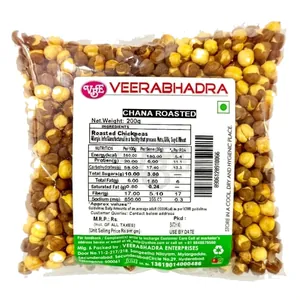
All Namkeen →- Veerabhadra Roasted Bhuna Chana
- −Red flag: High sodium (850mg per 100g)
- +Green flag: Source of protein (20g)
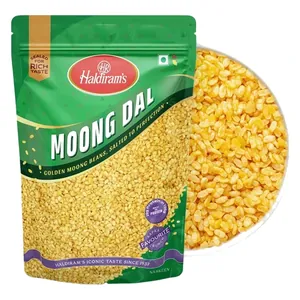
- Haldiram's Nagpur Moong Dal Namkeen
- −Red flag: High saturated fat (8.5g)
- −Red flag: Palm oil listed
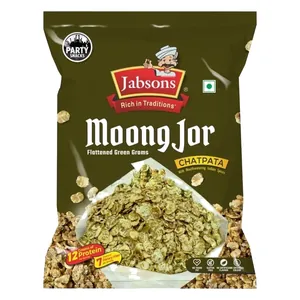
- Jabsons Flattened Green Grams Chatpata Moong Jor
- −Red flag: High saturated fat (10g)
- +Green flag: Source of protein (23g)
- Bikaji Lite Jhalmuri Bhel
- −Red flag: High sodium (711mg per 100g)
- −Red flag: High saturated fat (6g)
More from Jabsons
All Jabsons →- Jabsons Roasted Wheat Khakhra (Methi)
- −Red flag: High sodium (950mg per 100g)
- −Red flag: High saturated fat (7g)
- Jabsons Roasted Wheat Khakhra Jeera
- −Red flag: High sodium (950mg per 100g)
- −Red flag: High saturated fat (7g)
- Chikki Peanut Gud (Less Sweet)
- −Red flag: High added sugar (18g per 100g)
- −Red flag: High saturated fat (6g)
- Jabsons Salted Banana Chips
- −Red flag: High sodium (610mg per 100g)
- −Red flag: High saturated fat (18g)