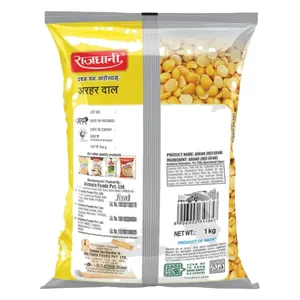
Rajdhani Chana Sattu
Published · Last updated
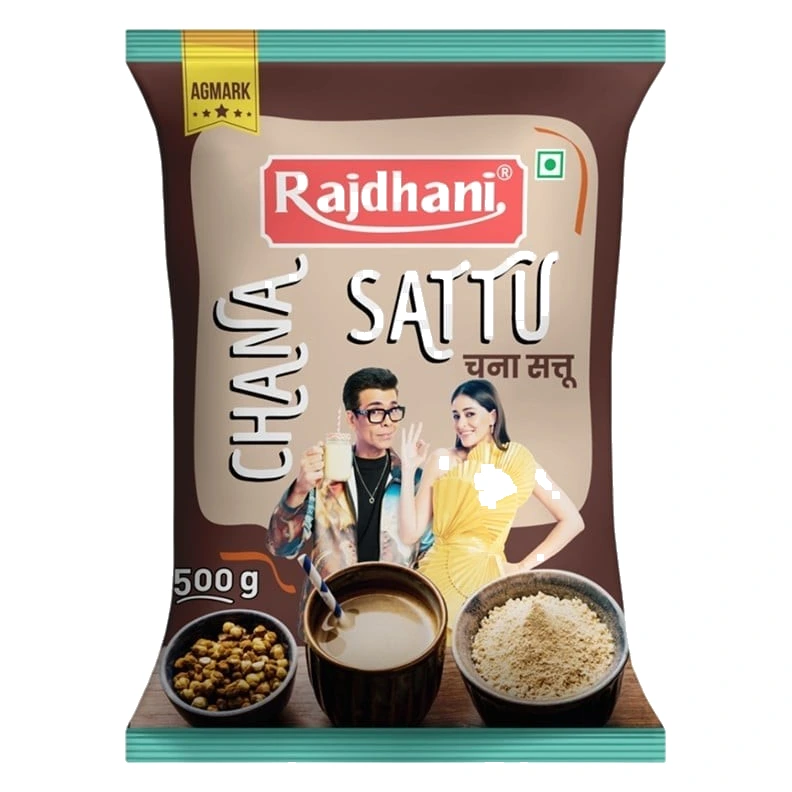
A realistic serve of Rajdhani Chana Sattu (50 g, one of two serves per pack) has 206 kcal, 11.5 g protein, 30.9 g carbohydrate, 3.9 g fat, 0 g added sugar and 320 mg sodium. Per 100 g it has 411 kcal, 23 g protein, 61.8 g carbohydrate, 7.7 g fat, 0 g saturated fat, 0 g added sugar, 16 g fibre and 640 mg sodium.
Rajdhani Chana Sattu is a single-ingredient flour made from Bengal gram, the chickpea. It scores BA3: nutrition is solid on protein and fibre, the ingredients are as clean as a label gets, and risk is moderate because of the sodium. A useful staple a few times a week, mixed into drinks, rotis or stuffings.
Ingredients, decoded
1 listed- Bengal Gram
1½ teaspoons of sugar in every 100 g · 7.1 g total sugar, 5 g a teaspoon
Score and nutrition facts for Rajdhani Chana Sattu:
| Energy | 411 kcal |
|---|---|
| Protein | 23 g |
| Carbohydrates | 61.8 g |
| Total sugars | 7.1 g |
| Added sugars | 0 g |
| Dietary fibre | 16 g |
| Total fat | 7.7 g |
| Saturated fat | 0 g |
| Trans fat | 0 g |
| Cholesterol | 0 mg |
| Sodium | 640 mg |
Think this score is wrong?
Why Rajdhani Chana Sattu scores BA3
Nutrition is a B on 23 g protein and 16 g fibre per 100 g. Ingredients are an A with only Bengal gram listed, and risk is a 3 mainly because of 640 mg sodium per 100 g.
Good nutrient density
- Protein
- 23 g
- Fibre
- 16 g
- Vitamins and minerals
- None declared
- Energy
- 411 kcal
01 Nutrition density: why B
Protein is 23 g per 100 g and fibre is 16 g, both coming from the Bengal gram itself. In one 50 g serve that is 11.5 g protein and 8 g fibre.
No vitamins or minerals are declared, so the grade rests on protein and fibre alone. Total sugar is 7.1 g with none added.
Scored on protein, fibre and twelve vitamins and minerals, against the Codex and FSSAI "source" and "high" levels, per 100 g and per 100 kcal. Protein also has to supply at least 12.5% of the calories to count, and 25% for full credit.
Clean, minimally processed
- Base
- Bengal Gram
- Sweeteners
- None added
- Additives
- 0
- Flagged
- None
02 Ingredient integrity: why A
The list is a single ingredient, Bengal gram, with no additives, no hydrogenated fat and no hollow label promise, so nothing costs ingredient points.
The back-of-pack claim of no artificial colours, flavour or preservatives matches the list.
Scored on how processed the ingredients are, which additives are used and why, and whether the label keeps its promises.
Moderate risk
- Added sugar
- 0 g
- Sodium
- 640 mg
- Saturated fat
- 0 g
- Trans fat
- 0 g
03 Load risk: why 3
Sodium is the largest driver: 640 mg per 100 g, 320 mg in a 50 g serve. Energy adds to it at 411 kcal per 100 g, about 206 kcal per serve.
Added sugar is 0 g, saturated fat is 0 g and trans fat is 0 g, so none of them play a part.
Scored on free sugar, sodium, saturated fat and trans fat, each weighed by how strong the evidence of harm is.
Red flags
- −Red flag: High sodium (640mg per 100g)
Green flags
- +Green flag: Source of protein (23g)
- +Green flag: High fibre (16g)
- +Green flag: No added sugar
Does Rajdhani Chana Sattu live up to its claims?
The protein and no-additives claims hold. The retailer page's vitamins A and C and calcium are not on the pack panel, which declares no vitamins or minerals.
- Product nameHolds
“Chana Sattu”
The only ingredient is Bengal gram, the chickpea, so the name matches the list.
- On the packHolds
“No Artificial Colours, Flavour or Preservatives”
Only Bengal gram is listed, so no colour, flavour or preservative is present in the ingredients.
- Retail listingHolds
“Rich in protein”
23 g protein per 100 g, so 11.5 g in a 50 g serve.
- Retail listingBe careful
“Important vitamins - A & C, minerals and calcium”
The retailer page mentions vitamins A and C and calcium, but the pack panel declares no vitamins, minerals or calcium.
- On the packHolds
“Agmark Sattu Grade - Standard”
The pack prints the Agmark mark on the front and the grade Standard on the back. It is a grade label, not a nutrition figure.
What's in Rajdhani Chana Sattu?
The list is one ingredient, Bengal gram, with no additives. The only thing to watch is the declared sodium, since no salt is listed.
1 ingredient listed. None of them is an additive or watched ingredient in our research.
The ingredient list, read for you
Bengal gram is the only ingredient, so the flour is simply ground chickpea with nothing added. Its protein and fibre are what the nutrition panel reflects, and no percentage is needed because there is nothing else to share the list.
Ingredients to watch
- SodiumWorth watching
640 mg per 100 g, 320 mg per 50 g serve. No salt is listed, so the figure is worth knowing when you add salt to a drink or filling.
- Energy densityWorth watching
411 kcal per 100 g, about 206 kcal per serve, so portion size matters.
- Protein and fibreFine
23 g protein and 16 g fibre per 100 g, or 11.5 g and 8 g per serve.
- Single ingredientFine
Bengal gram only, with no additives, no added sugar and no saturated or trans fat declared.
What it doesn’t have
- No vitamins, minerals or calcium are declared on the panel.
- The list shows no salt, yet the panel declares 640 mg sodium per 100 g.
What to know about Rajdhani Chana Sattu
One-ingredient flour with 23 g protein and 16 g fibre
Rajdhani Chana Sattu is a 500 g pack of flour whose ingredient list reads Bengal Gram and nothing else. It is bought as a high-protein pantry staple, usually stirred into water as a drink or used as a filling or an addition to flatbread dough. No percentage is declared, which is not a gap for a one-ingredient food.
Per 100 g the pack declares 411 kcal, 23 g protein, 16 g fibre, 7.7 g fat, 7.1 g total sugar and no added sugar. The 50 g serve on the pack gives about 206 kcal, 11.5 g protein and 8 g fibre, and a pack holds two serves. Sodium is declared at 640 mg per 100 g, or 320 mg per serve.
The name and the back-of-pack promise of no artificial colours, flavour or preservatives both match the list. The retailer page also mentions vitamins A and C and calcium, which the pack panel does not declare. CleanPlate scores it BA3.
Who should eat Rajdhani Chana Sattu?
A few times a week suits most adults, children, active people and those managing blood sugar, with the 50 g serve as the guide.
- Most adultsA few times a week
11.5 g protein per serve, with 320 mg sodium and 206 kcal.
- ChildrenA few times a week
Clean single ingredient, but 320 mg sodium per 50 g serve is a lot for a small child.
- Diabetes or prediabetesA few times a week
61.8 g carbohydrate per 100 g, with 16 g fibre and no added sugar. Check with your doctor for portions.
- Active peopleA few times a week
23 g protein per 100 g suits post-activity meals, though the serve is 206 kcal.
Recipes with Rajdhani Chana Sattu
Sattu works as a drink, a paratha or litti filling, or a mix into dough, and a 50 g serve brings 11.5 g protein to each.
Sattu drink
Stir a 50 g serve into water with lemon and spices, which gives 11.5 g protein and 8 g fibre in the glass.
Sattu paratha
Use sattu as the filling in whole wheat dough, so each 50 g adds 11.5 g protein to the flatbread.
Litti or stuffed bread filling
Mix sattu with spices and a little oil as a stuffing, keeping salt low because the flour already declares 320 mg sodium per serve.
Rajdhani Chana Sattu: common questions
Is Rajdhani Chana Sattu healthy?
Rajdhani Chana Sattu is high in salt and calories, so a few servings a week is fine.
How many calories and how much protein are in Rajdhani Chana Sattu?
Per 100 g, Rajdhani Chana Sattu has 411 kcal, 23 g protein, 61.8 g carbohydrate, 7.7 g fat and 0 g saturated fat. One serve (50 g, one of two serves per pack) has 206 kcal and 11.5 g protein.
What are the ingredients in Rajdhani Chana Sattu?
1 ingredient, in label order: Bengal Gram.
Does Rajdhani Chana Sattu live up to its claims?
5 claims checked: 4 hold, 1 needs care. "Important vitamins - A & C, minerals and calcium" needs care: The retailer page mentions vitamins A and C and calcium, but the pack panel declares no vitamins, minerals or calcium.
Who should limit Rajdhani Chana Sattu?
Most adults: a few times a week. 11.5 g protein per serve, with 320 mg sodium and 206 kcal. Children: a few times a week. Clean single ingredient, but 320 mg sodium per 50 g serve is a lot for a small child. Diabetes or prediabetes: a few times a week. 61.8 g carbohydrate per 100 g, with 16 g fibre and no added sugar. Check with your doctor for portions.
How much sugar, salt and saturated fat does Rajdhani Chana Sattu have?
Per 100 g, Rajdhani Chana Sattu has 0 g added sugar, 640 mg sodium (about 1.6 g salt) and 0 g saturated fat. The FSSAI and UK FSA "high" lines are 10 g added sugar, 600 mg sodium and 5 g saturated fat per 100 g. It is high in salt.
What does the BA3 score mean for Rajdhani Chana Sattu?
The first letter (B) grades nutrition density on A to E, the second (A) grades ingredient integrity on A to E, and the number (3) grades load risk on 1 to 5. A and 1 are best. Nutrition: Protein is 23 g per 100 g and fibre is 16 g, both coming from the Bengal gram itself. In one 50 g serve that is 11.5 g protein and 8 g fibre. Ingredients: The list is a single ingredient, Bengal gram, with no additives, no hydrogenated fat and no hollow label promise, so nothing costs ingredient points. Load risk: Sodium is the largest driver: 640 mg per 100 g, 320 mg in a 50 g serve. Energy adds to it at 411 kcal per 100 g, about 206 kcal per serve.
Last reviewed October 31, 2026. Scored with the CleanPlate method from the published label. Spotted a mistake? .
Reference values: FSSAI labelling regulations, Codex Alimentarius, ICMR-NIN and the UK front of pack guidance. Where our label data comes from.
Label read on 31 October 2026, from photos of the pack. If the pack has changed since, tell us.
Score history (1)
| Date | Score | Method | Why |
|---|---|---|---|
| 31 October 2026 | BA3 | v5.0 | First scored |
Every change to this score is logged. See corrections and the method changelog.
Better Atta & Flours
All Atta & Flours →- Aashirvaad 100% Chana Dal Besan (Kadale Hittu/Senagapindi)
- +Green flag: Source of protein (22.5g)
- +Green flag: High fibre (9.3g)
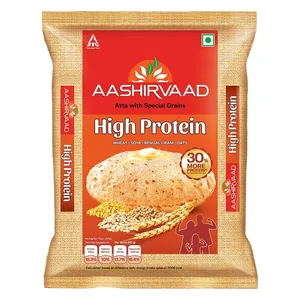
- Aashirvaad High Protein Atta
- +Green flag: Source of protein (14.7g)
- +Green flag: High fibre (13.6g)
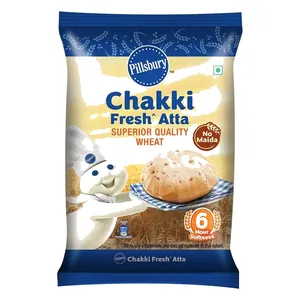
- Pillsbury Fresh Superior-Quality Chakki Atta
- +Green flag: High fibre (10g)
- +Green flag: No added sugar
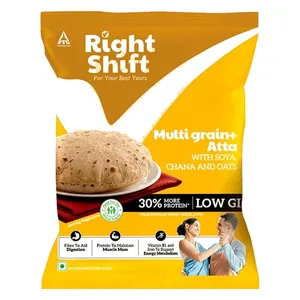
- Right Shift Multigrain Atta (High Protein, Low GI)
- +Green flag: Source of protein (14.7g)
- +Green flag: High fibre (13.6g)