Doodh Peda
Published · Last updated
A realistic serve of Doodh Peda (1 piece, 34 g) has 152 kcal, 5.2 g protein, 16.9 g carbohydrate, 7 g fat, 10.2 g added sugar and 71 mg sodium. Per 100 g it has 447 kcal, 15.4 g protein, 49.8 g carbohydrate, 20.7 g fat, 14.5 g saturated fat, 30 g added sugar and 208 mg sodium.
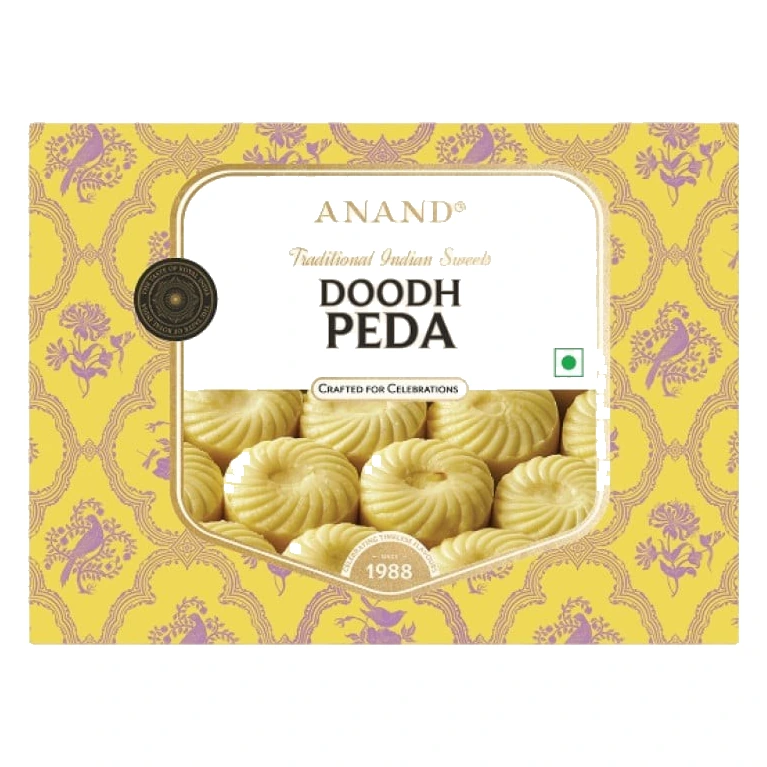
Anand Doodh Peda is a traditional milk sweet made from milk solids, sugar, ghee and cardamom. It scores DB4: low on nutrition because the protein comes with a lot of sugar and no fibre, a short ingredient list with no additives, and high risk from the sugar and saturated fat. Best kept for celebrations, one piece at a time.
Ingredients, decoded
4 listed- Milk Solids
- Sugar
- Ghee (Clarified Butter)
- Cardamom Powder
8½ teaspoons of sugar in every 100 g · 42 g total sugar, 5 g a teaspoon
Score and nutrition facts for Doodh Peda:
| Energy | 447 kcal |
|---|---|
| Protein | 15.4 g |
| Carbohydrates | 49.8 g |
| Total sugars | 42 g |
| Added sugars | 30 g |
| Total fat | 20.7 g |
| Saturated fat | 14.5 g |
| Trans fat | 0 g |
| Cholesterol | 46 mg |
| Sodium | 208 mg |
Think this score is wrong?
Why Doodh Peda scores DB4
Nutrition is a D because the protein comes with a lot of sugar and no fibre or vitamins. Ingredients are a B for a short, additive-free list. Risk is a 4 on 14.5 g saturated fat per 100 g.
Low nutrient density
- Protein
- 15.4 g
- Fibre
- Not declared
- Vitamins and minerals
- None declared
- Energy
- 447 kcal
01 Nutrition density: why D
Protein is 15.4 g per 100 g, mostly from the milk solids, which is a real strength for a sweet. Against it, 42 g of total sugar and 30 g of added sugar sit in the same 100 g, and 447 kcal is a lot of energy.
No fibre, vitamins or minerals are declared, so nothing else adds to the grade.
Scored on protein, fibre and twelve vitamins and minerals, against the Codex and FSSAI "source" and "high" levels, per 100 g and per 100 kcal. Protein also has to supply at least 12.5% of the calories to count, and 25% for full credit.
Good, few concerning additives
- Base
- Milk Solids
- Main fat
- Ghee
- Sweeteners
- Sugar
- Additives
- 0
- Flagged
- None
02 Ingredient integrity: why B
The list is four plain items led by milk solids at 72%, then sugar, ghee and cardamom. No additive is listed and no label promise is hollow, so nothing costs ingredient points.
Sugar, ghee and cardamom carry no percentage on the pack, which keeps the list from being fully transparent.
Scored on how processed the ingredients are, which additives are used and why, and whether the label keeps its promises.
High risk
- Added sugar
- 30 g
- Sodium
- 208 mg
- Saturated fat
- 14.5 g
- Trans fat
- 0 g
03 Load risk: why 4
Saturated fat drives the risk number: 14.5 g per 100 g, nearly three times the 5 g high line, and about 4.9 g in one 34 g piece. Added sugar of 30 g per 100 g is the next largest part.
Energy adds some, and sodium at 208 mg per 100 g adds little. Trans fat is declared as 0 g and no hydrogenated fat is listed.
Scored on free sugar, sodium, saturated fat and trans fat, each weighed by how strong the evidence of harm is.
Red flags
- −Red flag: High added sugar (30g per 100g)
- −Red flag: High saturated fat (14.5g)
Green flags
- +Green flag: Source of protein (15.4g)
- +Green flag: No additives
Does Doodh Peda live up to its claims?
The milk-solids and no-preservatives claims hold: milk solids are 72% and no additive is listed. The only conflict is the serve, 34 g on the pack against 32 g on the retailer page.
- Product nameHolds
“Doodh Peda”
Milk solids are the first ingredient at 72%, with sugar, ghee and cardamom making up the rest.
- On the packHolds
“No Preservatives”
No preservative or other additive appears in the ingredient list.
- Retail listingHolds
“Made from rich milk solids (khoya)”
Milk solids make up 72% of the sweet, and they supply most of its 15.4 g protein per 100 g.
- Retail listingBe careful
“1 piece (32 g) serving”
The retailer page shows 1 piece as 32 g, the pack shows 34 g. The per-100 g values are the same on both, and the 34 g serve is used here.
What's in Doodh Peda?
Milk solids, sugar, ghee and cardamom make up the whole list. The sugar and the ghee bring the sweetness and the saturated fat.
4 ingredients listed. None of them is an additive or watched ingredient in our research.
The ingredient list, read for you
Milk solids lead the list at 72%, so the sweet is mostly reduced milk (khoya). Sugar comes next for sweetness, then ghee for richness and cardamom powder for flavour. Sugar, ghee and cardamom have no percentage printed.
The label numbers, read for you
Added sugar is 30 g per 100 g, about 10.2 g in one 34 g piece, and saturated fat is 14.5 g per 100 g, about 4.9 g a piece. Those two numbers decide the risk grade. Energy is 447 kcal per 100 g, about 152 kcal a piece.
Protein is the strong point at 15.4 g per 100 g, about 5.2 g a piece. Sodium is low at 208 mg per 100 g. No fibre, vitamins or minerals are declared, and trans fat is 0 g.
What it doesn’t have
- No fibre, vitamins or minerals are declared on the panel.
- The pack prints no net quantity, so the box size is not known.
What to know about Doodh Peda
Mostly milk, but 30 g added sugar
Anand Doodh Peda is a box of traditional milk sweets built from four things: milk solids (72%), sugar, ghee and cardamom powder. It is bought for festivals, gifting and the occasional treat, and the pack leans on a handmade, since-1988 mithai story.
Per 100 g it has 447 kcal, 15.4 g protein, 30 g added sugar and 14.5 g saturated fat. One piece, at the 34 g the pack prints, comes to about 152 kcal, 5.2 g protein, 10.2 g added sugar and 4.9 g saturated fat. Sodium is modest at 208 mg per 100 g, about 71 mg a piece.
The name and the list agree: the main ingredient is milk solids, with no additives and no preservatives. What the list cannot hide is that sugar and ghee sit behind the milk and bring the sugar and saturated fat. CleanPlate scores it DB4.
Who should eat Doodh Peda?
An occasional sweet for most adults and children, and rarely for anyone managing blood sugar or weight. One piece has about 10.2 g added sugar.
- Most adultsOccasionally
One piece has about 10.2 g added sugar and 4.9 g saturated fat.
- ChildrenOccasionally
A small piece still brings about 10.2 g added sugar, with no additives.
- Diabetes or prediabetesRarely
30 g added sugar per 100 g, about 10.2 g in a piece.
- Weight managementRarely
About 152 kcal in a 34 g piece, and it is easy to eat more than one.
Doodh Peda: common questions
Is Doodh Peda healthy?
Doodh Peda is high in sugar, saturated fat and calories, so occasional and moderate intake is fine and won't affect your health in any major way, but it shouldn't be a frequent treat.
How many calories and how much protein are in Doodh Peda?
Per 100 g, Doodh Peda has 447 kcal, 15.4 g protein, 49.8 g carbohydrate, 20.7 g fat and 14.5 g saturated fat. One serve (1 piece, 34 g) has 152 kcal and 5.2 g protein.
What are the ingredients in Doodh Peda?
4 ingredients, in label order: Milk Solids, Sugar, Ghee (Clarified Butter), Cardamom Powder.
Does Doodh Peda live up to its claims?
4 claims checked: 3 hold, 1 needs care. "1 piece (32 g) serving" needs care: The retailer page shows 1 piece as 32 g, the pack shows 34 g. The per-100 g values are the same on both, and the 34 g serve is used here.
Who should limit Doodh Peda?
Most adults: occasionally. One piece has about 10.2 g added sugar and 4.9 g saturated fat. Children: occasionally. A small piece still brings about 10.2 g added sugar, with no additives. Diabetes or prediabetes: rarely. 30 g added sugar per 100 g, about 10.2 g in a piece.
How much sugar, salt and saturated fat does Doodh Peda have?
Per 100 g, Doodh Peda has 30 g added sugar, 208 mg sodium (about 0.5 g salt) and 14.5 g saturated fat. The FSSAI and UK FSA "high" lines are 10 g added sugar, 600 mg sodium and 5 g saturated fat per 100 g. It is high in sugar and saturated fat.
What does the DB4 score mean for Doodh Peda?
The first letter (D) grades nutrition density on A to E, the second (B) grades ingredient integrity on A to E, and the number (4) grades load risk on 1 to 5. A and 1 are best. Nutrition: Protein is 15.4 g per 100 g, mostly from the milk solids, which is a real strength for a sweet. Against it, 42 g of total sugar and 30 g of added sugar sit in the same 100 g, and 447 kcal is a lot of energy. Ingredients: The list is four plain items led by milk solids at 72%, then sugar, ghee and cardamom. No additive is listed and no label promise is hollow, so nothing costs ingredient points. Load risk: Saturated fat drives the risk number: 14.5 g per 100 g, nearly three times the 5 g high line, and about 4.9 g in one 34 g piece. Added sugar of 30 g per 100 g is the next largest part.
Last reviewed November 3, 2026. Scored with the CleanPlate method from the published label. Spotted a mistake? .
Reference values: FSSAI labelling regulations, Codex Alimentarius, ICMR-NIN and the UK front of pack guidance. Where our label data comes from.
Label read on 3 November 2026, from photos of the pack. If the pack has changed since, tell us.
Score history (1)
| Date | Score | Method | Why |
|---|---|---|---|
| 3 November 2026 | DB4 | v5.0 | First scored |
Every change to this score is logged. See corrections and the method changelog.
Better Indian Sweets
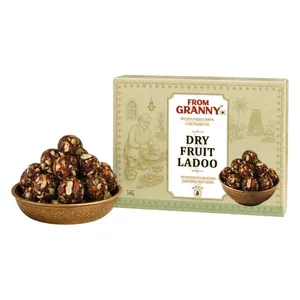
All Indian Sweets →- Dry Fruit Laddu
- −Red flag: High sugar (50g per 100g)
- −Red flag: High saturated fat (6g)
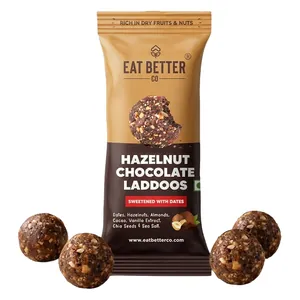
- Hazelnut Chocolate Laddoos
- −Red flag: High sugar (32.2g per 100g)
- +Green flag: High fibre (9.3g)
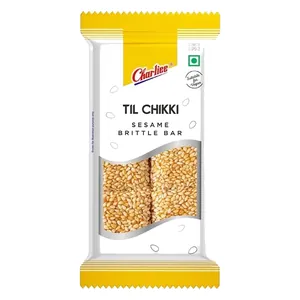
- Til Chikki by Charliee
- −Red flag: High added sugar (33.3g per 100g)
- +Green flag: Source of protein (17.3g)
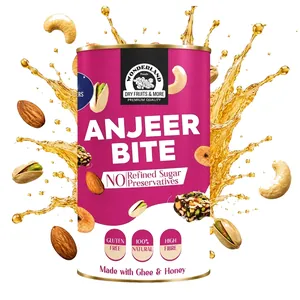
- Wonderland Foods Vrat Anjeer Bites
- −Red flag: High added sugar (15.8g per 100g)
- −Red flag: High saturated fat (18.1g)