Fulva Tender Coconut Halwa
Published · Last updated
A realistic serve of Fulva Tender Coconut Halwa (1 serve, 50 g) has 215 kcal, 0.5 g protein, 37.5 g carbohydrate, 7.5 g fat, 31.5 g added sugar and 3 mg sodium. Per 100 g it has 430 kcal, 1 g protein, 75 g carbohydrate, 15 g fat, 6 g saturated fat, 63 g added sugar, 2 g fibre and 5 mg sodium.
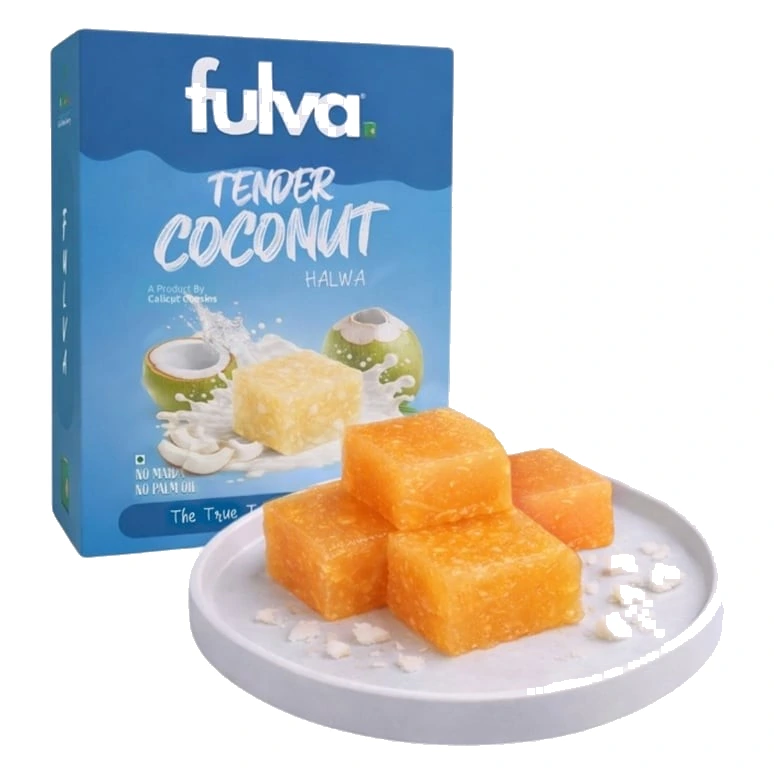
Fulva Tender Coconut Halwa is a soft Calicut-style sweet made from corn flour, sugar and sunflower oil, with coconut flakes giving the name. It scores EB5: nutrition is very low because it is nearly all sugar and starch, ingredients are decent for a short, simple list, and risk is highest because of the added sugar. A sweet for rare, small portions.
Ingredients, decoded
7 listed- Corn Flour
- Refined Sugar
- Sunflower Oil
- Water
- Tender Coconut Flakes
- Vanilla Flavouring Substance
- Citric Acid (INS 330, Acidity Regulator)
13 teaspoons of sugar in every 100 g · 64 g total sugar, 5 g a teaspoon
Score and nutrition facts for Fulva Tender Coconut Halwa:
| Energy | 430 kcal |
|---|---|
| Protein | 1 g |
| Carbohydrates | 75 g |
| Total sugars | 64 g |
| Added sugars | 63 g |
| Dietary fibre | 2 g |
| Total fat | 15 g |
| Saturated fat | 6 g |
| Trans fat | 0 g |
| Cholesterol | 0 mg |
| Sodium | 5 mg |
| Iron | 0.6 mg |
| Calcium | 0 mg |
| Potassium | 90 mg |
Think this score is wrong?
Why Fulva Tender Coconut Halwa scores EB5
Nutrition is an E on 1 g protein and 2 g fibre per 100 g. Ingredients are a B for a short, simple list, and risk is a 5 on 63 g added sugar per 100 g.
Very low nutrient density
- Protein
- 1 g
- Fibre
- 2 g
- Vitamins and minerals
- Iron, Calcium, Potassium
- Energy
- 430 kcal
01 Nutrition density: why E
Protein is only 1 g per 100 g and fibre 2 g, so there is almost nothing for the grade to build on. The largest protein source is corn flour, a refined starch, and the protein factor is held at 0.5.
Iron is 0.6 mg, potassium 90 mg and calcium 0 mg per 100 g, too little to earn micronutrient credit. The calories come mainly from sugar, starch and sunflower oil.
Scored on protein, fibre and twelve vitamins and minerals, against the Codex and FSSAI "source" and "high" levels, per 100 g and per 100 kcal. Protein also has to supply at least 12.5% of the calories to count, and 25% for full credit.
Good, few concerning additives
- Base
- Corn Flour
- Main fat
- Sunflower Oil
- Sweeteners
- Refined Sugar
- Additives
- 1
- Flagged
- None
02 Ingredient integrity: why B
The list is short and plain: corn flour, refined sugar, sunflower oil, water, coconut flakes, vanilla flavouring and citric acid. There is no maida, palm oil, hydrogenated fat or preservative, which keeps the grade high.
The vanilla flavouring has no class stated, which costs ingredient points, and citric acid costs none. Naming coconut on the pack without declaring its percentage also costs a small label point.
Scored on how processed the ingredients are, which additives are used and why, and whether the label keeps its promises.
Very high risk
- Added sugar
- 63 g
- Sodium
- 5 mg
- Saturated fat
- 6 g
- Trans fat
- 0 g
03 Load risk: why 5
Added sugar is the main driver: 63 g per 100 g, about 32 g in a 50 g serve. It makes up most of the risk score by itself, which is why the risk number is a 5.
Saturated fat adds to it at 6 g per 100 g, about 3 g per serve, and energy is 430 kcal per 100 g. Sodium is only 5 mg and trans fat is 0 g, so neither plays a part.
Scored on free sugar, sodium, saturated fat and trans fat, each weighed by how strong the evidence of harm is.
Red flags
- −Red flag: High added sugar (63g per 100g)
- −Red flag: High saturated fat (6g)
Green flags
- +Green flag: Low sodium
Does Fulva Tender Coconut Halwa live up to its claims?
The no-maida, no-palm-oil and no-preservative claims hold. Tender coconut in the name is real but small: it is fifth in the list and no percentage is declared.
- Product namePartly true
“Tender Coconut”
Tender coconut flakes are listed, but fifth and after water, and no percentage is declared. The base is corn flour and sugar.
- On the packHolds
“No Maida”
No refined wheat flour is listed. The base is corn flour.
- On the packHolds
“No Palm Oil”
The fat is sunflower oil, and no palm oil is listed.
- On the packHolds
“No added Preservatives”
No preservative is listed. Citric acid (INS 330) is there as an acidity regulator.
- Retail listingBe careful
“Premium dry fruits”
The retailer page mentions premium dry fruits, but the pack ingredient list has none. The only added pieces are coconut flakes.
What's in Fulva Tender Coconut Halwa?
Corn flour, refined sugar and sunflower oil lead the list, with coconut flakes after water. The added sugar and the undeclared coconut share are what to watch.
7 ingredients listed. None of them is an additive or watched ingredient in our research. 1 more entry looks like an additive we have not researched yet.
The ingredient list, read for you
Corn flour leads, then refined sugar and sunflower oil, so the halwa is mostly starch, sugar and fat. Water binds it, tender coconut flakes give the flavour named on the pack, and no share is declared for them. Vanilla flavouring rounds out the taste, and citric acid (INS 330) is the acidity regulator.
Not in our additive research yet: Citric Acid (INS 330, Acidity Regulator).
Ingredients to watch
- Added sugarConcern
63 g per 100 g, about 32 g in a 50 g serve. It is the main reason risk is at its highest.
- Saturated fatWorth watching
6 g per 100 g, about 3 g per serve, from sunflower oil and coconut.
- Flavouring, class not statedWorth watching
The vanilla flavouring substance is not labelled natural-only, so it costs ingredient points.
- Coconut share not declaredWorth watching
Coconut is in the name but its percentage is not given, which costs a small label point.
- Short, plain listFine
No maida, palm oil, hydrogenated fat or preservative. Citric acid is the only additive and costs no points.
What it doesn’t have
- No percentages are declared for any ingredient, including the coconut.
What to know about Fulva Tender Coconut Halwa
Mostly sugar and corn flour, with coconut in the name
Fulva Tender Coconut Halwa is a 200 g pack of Calicut-style halwa built from corn flour, refined sugar, sunflower oil and water, with tender coconut flakes, vanilla flavouring and citric acid. It is bought as a festive or shared sweet, and the pack leans on its Calicut tradition and a 'No Maida, No Palm Oil' promise. No ingredient percentages are declared.
Per 100 g it gives 430 kcal, 63 g added sugar, 15 g fat (6 g saturated), 1 g protein and 2 g fibre. The pack's own serve is 50 g, which means 215 kcal and about 32 g of added sugar, and the pack holds four such serves. Sodium is tiny at 5 mg per 100 g, and the halwa has no trans fat declared.
The name puts tender coconut up front, but coconut flakes sit fifth in the list, after water, and no share is declared. The no-maida, no-palm-oil and no-preservative claims all agree with the list. CleanPlate scores it EB5.
Who should eat Fulva Tender Coconut Halwa?
A rare sweet for most adults, and rarely or not at all for children, anyone with diabetes or prediabetes, or anyone managing weight, given 32 g added sugar per 50 g serve.
- Most adultsRarely
A 50 g serve has about 32 g added sugar and 215 kcal.
- ChildrenRarely
About 32 g added sugar per serve, with almost no protein or fibre.
- Diabetes or prediabetesAvoid
63 g added sugar per 100 g on a starch base with 2 g fibre.
- Weight managementRarely
430 kcal per 100 g with only 1 g protein to keep you full.
Fulva Tender Coconut Halwa: common questions
Is Fulva Tender Coconut Halwa healthy?
Fulva Tender Coconut Halwa is high in sugar, saturated fat and calories, so it is best kept as a rare treat.
How many calories and how much protein are in Fulva Tender Coconut Halwa?
Per 100 g, Fulva Tender Coconut Halwa has 430 kcal, 1 g protein, 75 g carbohydrate, 15 g fat and 6 g saturated fat. One serve (1 serve, 50 g) has 215 kcal and 0.5 g protein.
What are the ingredients in Fulva Tender Coconut Halwa?
7 ingredients, in label order: Corn Flour, Refined Sugar, Sunflower Oil, Water, Tender Coconut Flakes, Vanilla Flavouring Substance, Citric Acid (INS 330, Acidity Regulator).
Does Fulva Tender Coconut Halwa live up to its claims?
5 claims checked: 3 hold, 1 is partly true, 1 needs care. "Tender Coconut" is partly true: Tender coconut flakes are listed, but fifth and after water, and no percentage is declared. The base is corn flour and sugar. "Premium dry fruits" needs care: The retailer page mentions premium dry fruits, but the pack ingredient list has none. The only added pieces are coconut flakes.
Who should limit Fulva Tender Coconut Halwa?
Most adults: rarely. A 50 g serve has about 32 g added sugar and 215 kcal. Children: rarely. About 32 g added sugar per serve, with almost no protein or fibre. Diabetes or prediabetes: avoid. 63 g added sugar per 100 g on a starch base with 2 g fibre.
How much sugar, salt and saturated fat does Fulva Tender Coconut Halwa have?
Per 100 g, Fulva Tender Coconut Halwa has 63 g added sugar, 5 mg sodium (about 0 g salt) and 6 g saturated fat. The FSSAI and UK FSA "high" lines are 10 g added sugar, 600 mg sodium and 5 g saturated fat per 100 g. It is high in sugar and saturated fat.
What does the EB5 score mean for Fulva Tender Coconut Halwa?
The first letter (E) grades nutrition density on A to E, the second (B) grades ingredient integrity on A to E, and the number (5) grades load risk on 1 to 5. A and 1 are best. Nutrition: Protein is only 1 g per 100 g and fibre 2 g, so there is almost nothing for the grade to build on. The largest protein source is corn flour, a refined starch, and the protein factor is held at 0.5. Ingredients: The list is short and plain: corn flour, refined sugar, sunflower oil, water, coconut flakes, vanilla flavouring and citric acid. There is no maida, palm oil, hydrogenated fat or preservative, which keeps the grade high. Load risk: Added sugar is the main driver: 63 g per 100 g, about 32 g in a 50 g serve. It makes up most of the risk score by itself, which is why the risk number is a 5.
Last reviewed October 31, 2026. Scored with the CleanPlate method from the published label. Spotted a mistake? .
Reference values: FSSAI labelling regulations, Codex Alimentarius, ICMR-NIN and the UK front of pack guidance. Where our label data comes from.
Label read on 31 October 2026, from photos of the pack. If the pack has changed since, tell us.
Score history (1)
| Date | Score | Method | Why |
|---|---|---|---|
| 31 October 2026 | EB5 | v5.0 | First scored |
Every change to this score is logged. See corrections and the method changelog.
Better Indian Sweets
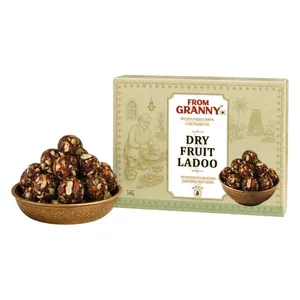
All Indian Sweets →- Dry Fruit Laddu
- −Red flag: High sugar (50g per 100g)
- −Red flag: High saturated fat (6g)
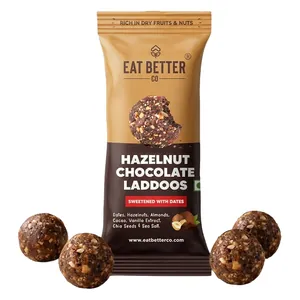
- Hazelnut Chocolate Laddoos
- −Red flag: High sugar (32.2g per 100g)
- +Green flag: High fibre (9.3g)
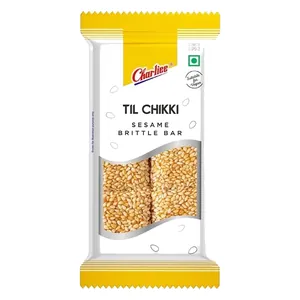
- Til Chikki by Charliee
- −Red flag: High added sugar (33.3g per 100g)
- +Green flag: Source of protein (17.3g)
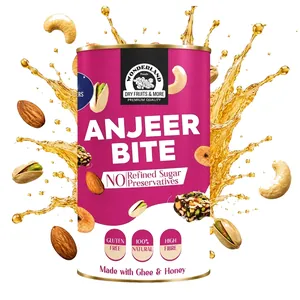
- Wonderland Foods Vrat Anjeer Bites
- −Red flag: High added sugar (15.8g per 100g)
- −Red flag: High saturated fat (18.1g)