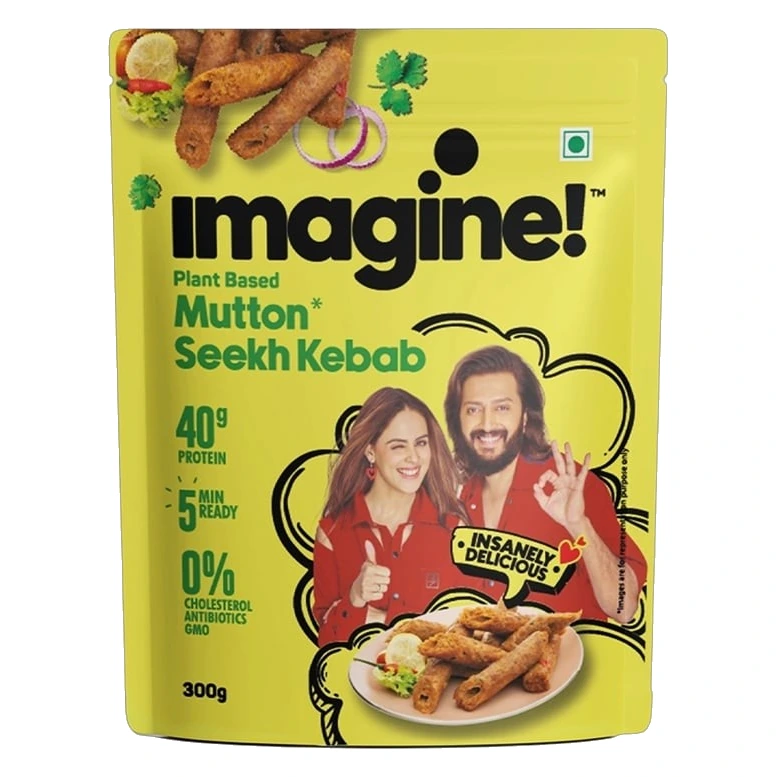
Imagine Plant Based Mutton Seekh Kebab
Published · Last updated
A realistic serve of Imagine Plant Based Mutton Seekh Kebab (150 g, half a 300 g pack) has 311 kcal, 20 g protein, 21.9 g carbohydrate, 15.8 g fat, 2.4 g added sugar and 588 mg sodium. Per 100 g it has 207 kcal, 13.4 g protein, 14.6 g carbohydrate, 10.6 g fat, 5.2 g saturated fat, 1.6 g added sugar and 392 mg sodium.
Imagine Plant Based Mutton Seekh Kebab is a frozen kebab made from soy granules, oil and wheat gluten, flavoured to taste like mutton. It scores DC3: modest on nutrition, middling on ingredients because of gums, a caramel colour and several flavourings, and moderate on risk from saturated fat and sodium. A reasonable meat-free option a few times a week, served with vegetables.
Ingredients, decoded
28 listed- Water
- Soy Granules (15%)
- Refined Sunflower Oil
- Vegetable Fat Spread
- Refined Vegetable Oil (Coconut Oil, Rice Bran Oil) (70.4%)
- Water
- Apple Cider Vinegar
- Soy Lecithin (INS 322)
- Iodised Salt
- Xanthan Gum (INS 415)
- Natural and Nature-Identical Flavour
- Lakadong Turmeric Powder
- Capsicum
- Garlic
- Onion
- Spices and Condiments
- Emulsifier (INS 461)
- Maida (Refined Wheat Flour)
- Wheat Gluten
- Coriander
- Ginger
- Thickener (INS 1405)
- Green Chilli
- Iodised Salt
- Yeast Extract
- Nature-Identical (Mutton) Flavouring Substance
- Gelling Agent (INS 407)
- Permitted Colour (INS 150d)
- Nature-Identical (Smoke Tandoor) Flavouring Substance
½ teaspoon of sugar in every 100 g · 2.2 g total sugar, 5 g a teaspoon
Score and nutrition facts for Imagine Plant Based Mutton Seekh Kebab:
| Energy | 207 kcal |
|---|---|
| Protein | 13.4 g |
| Carbohydrates | 14.6 g |
| Total sugars | 2.2 g |
| Added sugars | 1.6 g |
| Total fat | 10.6 g |
| Saturated fat | 5.2 g |
| Cholesterol | 1 mg |
| Sodium | 392.3 mg |
Think this score is wrong?
Why Imagine Plant Based Mutton Seekh Kebab scores DC3
Nutrition is a D, with 13.36 g protein per 100 g but no fibre or vitamins declared. Ingredients are a C because gums, a caramel colour and flavourings cost points. Risk is a 3, driven by 5.2 g saturated fat and 392 mg sodium per 100 g.
Low nutrient density
- Protein
- 13.4 g
- Fibre
- Not declared
- Vitamins and minerals
- None declared
- Energy
- 207 kcal
01 Nutrition density: why D
Protein is 13.36 g per 100 g and 20 g in a 150 g serve, mostly from soy granules, with wheat gluten adding more. That counts in its favour, but energy is 207 kcal per 100 g and the base is water, oil and refined flour.
No fibre or vitamins and minerals are declared, so little else adds to the grade.
Scored on protein, fibre and twelve vitamins and minerals, against the Codex and FSSAI "source" and "high" levels, per 100 g and per 100 kcal. Protein also has to supply at least 12.5% of the calories to count, and 25% for full credit.
Mixed processing and additives
- Base
- Water
- Main fat
- Refined Sunflower Oil
- Sweeteners
- None added
- Additives
- 5
- Flagged
- 3 ingredients
02 Ingredient integrity: why C
The list starts with water, soy granules (15%) and refined sunflower oil, then a vegetable fat spread of coconut oil and rice bran oil. Maida and wheat gluten are the binders, and the vegetables and spices are small and undeclared in amount.
Additives cost ingredient points: carrageenan (407) costs the most, then caramel colour (150d), and smaller amounts for xanthan gum, methylcellulose, enzyme-treated starch, soy lecithin and the nature-identical flavourings. No hydrogenated fat is listed, and the label makes no hollow promise.
Scored on how processed the ingredients are, which additives are used and why, and whether the label keeps its promises.
Moderate risk
- Added sugar
- 1.6 g
- Sodium
- 392.3 mg
- Saturated fat
- 5.2 g
03 Load risk: why 3
Sodium and saturated fat do most of the work: 392 mg sodium and 5.2 g saturated fat per 100 g, with the saturated fat just above the 5 g high line. One serve has 588 mg sodium and 7.8 g saturated fat.
Added sugar is 1.63 g per 100 g, so it adds little. No trans fat value is printed and none is listed as an ingredient.
Scored on free sugar, sodium, saturated fat and trans fat, each weighed by how strong the evidence of harm is.
Red flags
- −Red flag: High saturated fat (5.2g)
- −Red flag: Refined flour (maida) base
- −Red flag: Contains Carrageenan
- −Red flag: Contains Caramel Colour (Class IV)
Green flags
- +Green flag: High protein (13.4g per 100g)
Does Imagine Plant Based Mutton Seekh Kebab live up to its claims?
The protein, cholesterol, plant-based and palm-oil claims hold. The mutton name is flagged by the pack's own footnote as flavour only, and the 40 g protein figure is for the whole 300 g pack.
- Product namePartly true
“Mutton* Seekh Kebab”
A footnote says the word represents mutton flavour and not its true nature. The taste comes from a nature-identical mutton flavouring, and soy granules are 15%.
- On the packBe careful
“40g PROTEIN”
True for the whole 300 g pack, at 13.36 g per 100 g. A 150 g serve gives about 20 g.
- On the packHolds
“0% CHOLESTEROL”
The panel shows under 1 mg cholesterol per 100 g, and no animal ingredient is listed.
- On the packHolds
“100% PLANT-BASED”
The list is soy, wheat, oils, vegetables, spices and additives, with no meat, egg or dairy ingredient.
- On the packHolds
“0ml PALM OIL”
The fats listed are sunflower, coconut and rice bran oil, and no palm oil appears.
What's in Imagine Plant Based Mutton Seekh Kebab?
Water, soy granules and oils lead, with wheat gluten and maida as the binders. The watch items are the carrageenan, the caramel colour and the flavourings.
28 ingredients listed. Additives and watched ingredients we rate: 3 low concern. 4 more entries look like additives we have not researched yet.
The ingredient list, read for you
Water, soy granules (15%) and refined sunflower oil lead, so the kebab is mostly water, soy protein and oil. A vegetable fat spread of coconut and rice bran oil (70.4% of the spread) adds richness, and maida and wheat gluten hold it together.
Capsicum, garlic, onion, coriander, ginger and green chilli give the seekh seasoning, with yeast extract and nature-identical mutton and smoke tandoor flavourings supplying the meaty taste. The gelling agent, thickener, emulsifier and caramel colour shape the texture and colour.
The label numbers, read for you
Per 100 g the panel shows 207 kcal, 13.36 g protein, 10.55 g fat, 5.2 g saturated fat and 392 mg sodium. Saturated fat sits just above the 5 g high line, and sodium is the other number that moves the risk grade.
In the pack's 150 g serve, half the pack, that is about 311 kcal, 20 g protein, 7.8 g saturated fat and 588 mg sodium. Added sugar is low at 1.63 g per 100 g. No fibre, vitamins or minerals are declared.
What the additives do
Maida (low concern): cheap, soft base flour. Refined wheat flour with the bran and germ removed. Low in fibre and quick to digest. More on Maida.
Carrageenan (low concern): thickener and stabiliser. A seaweed-derived thickener used in dairy drinks and desserts. Food-grade carrageenan is approved, but its effect on the gut is debated. More on Carrageenan.
Caramel Colour (Class IV) (low concern): dark brown colour. Sulphite ammonia caramel, the brown colour in colas and sauces. It can contain 4-MEI, a by-product IARC lists as possibly carcinogenic. More on Caramel Colour (Class IV).
Not in our additive research yet: Soy Lecithin (INS 322); Xanthan Gum (INS 415); Emulsifier (INS 461); Thickener (INS 1405).
Ingredients to watch
- Nature-identical flavourings (mutton, smoke tandoor, general)Worth watching
Recreate the mutton and tandoor taste that soy and wheat do not have. They cost ingredient points.
- Methylcellulose (INS 461), xanthan gum (INS 415), soy lecithin (INS 322)Worth watching
Bind and emulsify the oil and water so the kebab holds its shape and stays moist. They cost ingredient points.
- Enzyme-treated starch (INS 1405)Fine
A thickener that helps hold water in the mix and firms the texture. It costs ingredient points.
- Carrageenan (INS 407)Fine
A gelling agent that gives the plant mix a meat-like bite and holds moisture. It costs ingredient points.
- Caramel colour class IV (INS 150d)Fine
Browns the kebab so it looks grilled. It costs ingredient points.
What it doesn’t have
- No fibre, vitamins or minerals are declared on the panel.
- No percentage is given for the vegetables or spices.
What to know about Imagine Plant Based Mutton Seekh Kebab
A soy kebab with 20 g protein per serve and a long additive list
A 300 g frozen pack of plant-based seekh kebab, built from water, soy granules (15%), refined sunflower oil and a vegetable fat spread of coconut and rice bran oil, with capsicum, garlic, onion, spices, maida and wheat gluten. It is sold to people who want the shape and spice of a mutton seekh without meat, ready in about five minutes on a pan.
Per 100 g the panel shows 207 kcal, 13.36 g protein, 10.55 g fat, 5.2 g saturated fat and 392 mg sodium. The pack prints a 150 g serve, two per pack, so one serve is about 311 kcal, 20 g protein, 7.8 g saturated fat and 588 mg sodium. The pack's 40 g protein headline is for the whole 300 g.
The front says mutton, and a footnote says the word stands for mutton flavour and not its true nature. That is honest: the taste comes from a nature-identical mutton flavouring, and no animal ingredient is listed. The list also carries a gelling agent, a thickener, an emulsifier, a caramel colour and three flavourings. CleanPlate scores it DC3.
Who should eat Imagine Plant Based Mutton Seekh Kebab?
A few times a week at most for most adults, and occasionally for children or anyone watching blood pressure, since one serve has about 588 mg sodium.
- Most adultsA few times a week
A serve has 20 g protein, but also 7.8 g saturated fat and 588 mg sodium.
- ChildrenOccasionally
Caramel colour and flavourings, with 588 mg sodium in one serve.
- High blood pressureOccasionally
One serve has 588 mg sodium, about 29% of the day's value on the pack.
- Weight managementA few times a week
About 311 kcal per serve, before the oil used to cook it.
Recipes with Imagine Plant Based Mutton Seekh Kebab
Serve it as a roll with onions and chutney, or alongside salad, so the 20 g protein per serve comes with vegetables and fibre.
Seekh kebab roll
Wrap in a roti with sliced onion, chutney and lemon, so a serve's 20 g protein comes with some vegetables.
Air-fried kebab
Air-fry or bake instead of pan-frying to avoid the 2 tablespoons of oil the pack directs, since the kebab already has 10.55 g fat per 100 g.
Kebab salad bowl
Slice the cooked kebab over cucumber, tomato and onion to add the fibre the panel does not declare.
Imagine Plant Based Mutton Seekh Kebab: common questions
Is Imagine Plant Based Mutton Seekh Kebab healthy?
Imagine Plant Based Mutton Seekh Kebab is high in saturated fat, so a few servings a week is fine.
How many calories and how much protein are in Imagine Plant Based Mutton Seekh Kebab?
Per 100 g, Imagine Plant Based Mutton Seekh Kebab has 207 kcal, 13.4 g protein, 14.6 g carbohydrate, 10.6 g fat and 5.2 g saturated fat. One serve (150 g, half a 300 g pack) has 311 kcal and 20 g protein.
What are the ingredients in Imagine Plant Based Mutton Seekh Kebab?
28 ingredients, in label order: Water, Soy Granules (15%), Refined Sunflower Oil, Vegetable Fat Spread (Refined Vegetable Oil (Coconut Oil, Rice Bran Oil) (70.4%), Water, Apple Cider Vinegar, Soy Lecithin (INS 322), Iodised Salt, Xanthan Gum (INS 415), Natural and Nature-Identical Flavour, Lakadong Turmeric Powder), Capsicum, Garlic, Onion, Spices and Condiments, Emulsifier (INS 461), Maida (Refined Wheat Flour), Wheat Gluten, Coriander, Ginger.... Flagged: Maida (low concern), Carrageenan (low concern), Caramel Colour (Class IV) (low concern).
Does Imagine Plant Based Mutton Seekh Kebab live up to its claims?
5 claims checked: 3 hold, 1 is partly true, 1 needs care. "Mutton* Seekh Kebab" is partly true: A footnote says the word represents mutton flavour and not its true nature. The taste comes from a nature-identical mutton flavouring, and soy granules are 15%. "40g PROTEIN" needs care: True for the whole 300 g pack, at 13.36 g per 100 g. A 150 g serve gives about 20 g.
Who should limit Imagine Plant Based Mutton Seekh Kebab?
Most adults: a few times a week. A serve has 20 g protein, but also 7.8 g saturated fat and 588 mg sodium. Children: occasionally. Caramel colour and flavourings, with 588 mg sodium in one serve. High blood pressure: occasionally. One serve has 588 mg sodium, about 29% of the day's value on the pack.
How much sugar, salt and saturated fat does Imagine Plant Based Mutton Seekh Kebab have?
Per 100 g, Imagine Plant Based Mutton Seekh Kebab has 1.6 g added sugar, 392 mg sodium (about 1 g salt) and 5.2 g saturated fat. The FSSAI and UK FSA "high" lines are 10 g added sugar, 600 mg sodium and 5 g saturated fat per 100 g. It is high in saturated fat.
What does the DC3 score mean for Imagine Plant Based Mutton Seekh Kebab?
The first letter (D) grades nutrition density on A to E, the second (C) grades ingredient integrity on A to E, and the number (3) grades load risk on 1 to 5. A and 1 are best. Nutrition: Protein is 13.36 g per 100 g and 20 g in a 150 g serve, mostly from soy granules, with wheat gluten adding more. That counts in its favour, but energy is 207 kcal per 100 g and the base is water, oil and refined flour. Ingredients: The list starts with water, soy granules (15%) and refined sunflower oil, then a vegetable fat spread of coconut oil and rice bran oil. Maida and wheat gluten are the binders, and the vegetables and spices are small and undeclared in amount. Load risk: Sodium and saturated fat do most of the work: 392 mg sodium and 5.2 g saturated fat per 100 g, with the saturated fat just above the 5 g high line. One serve has 588 mg sodium and 7.8 g saturated fat.
Last reviewed November 3, 2026. Scored with the CleanPlate method from the published label. Spotted a mistake? .
Reference values: FSSAI labelling regulations, Codex Alimentarius, ICMR-NIN and the UK front of pack guidance. Where our label data comes from.
Label read on 3 November 2026, from photos of the pack. If the pack has changed since, tell us.
Score history (1)
| Date | Score | Method | Why |
|---|---|---|---|
| 3 November 2026 | DC3 | v5.0 | First scored |
Every change to this score is logged. See corrections and the method changelog.
Better Frozen Ready Meals & Snacks
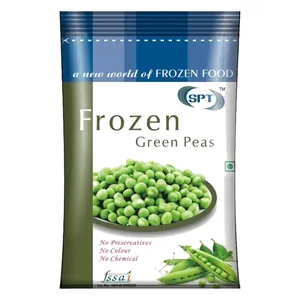
All Frozen Ready Meals & Snacks →- SPT Frozen Green Peas
- +Green flag: Source of protein (6.5g)
- +Green flag: Source of fibre
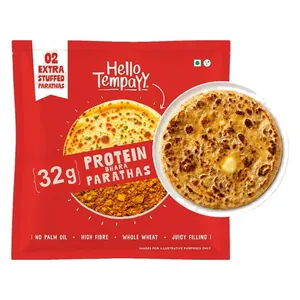
- Hello Tempayy Achari Tadka Protein Paratha
- +Green flag: High protein (15.8g per 100g)
- +Green flag: High fibre (6.4g)
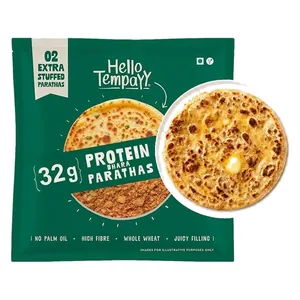
- Hello Tempayy Punjabi Style Protein Paratha
- +Green flag: High protein (15.9g per 100g)
- +Green flag: High fibre (6.1g)
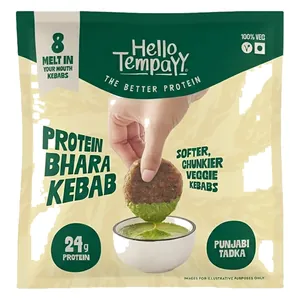
- Hello Tempayy Protein Bhara Veg Kebab
- +Green flag: Source of protein (7.9g)
- +Green flag: High fibre (10.6g)